
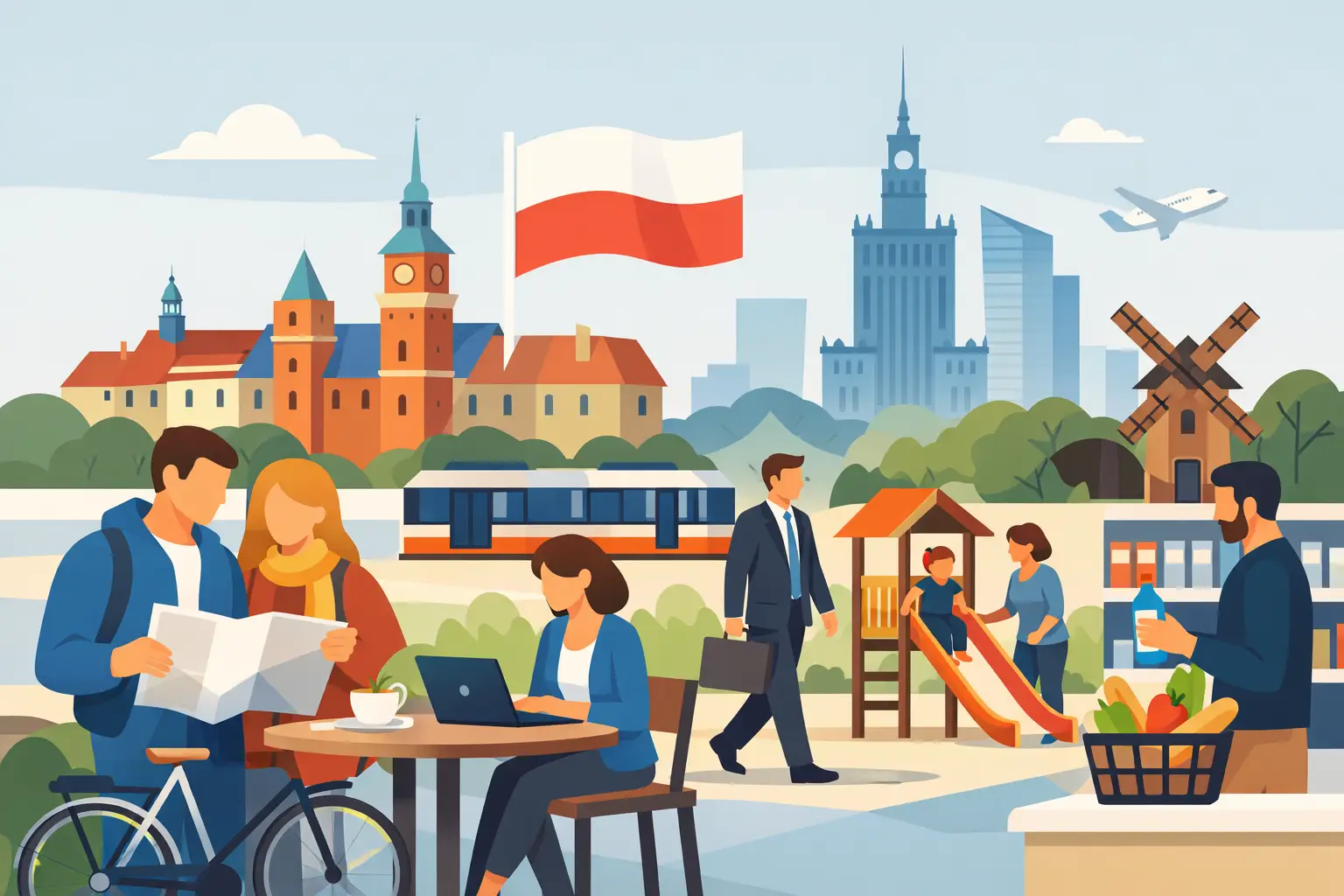
You can arrive in Poland with a job contract, a rental booking, and a stack of documents and still feel unprepared by the end of your first week. That is usually the real story for expats in Poland. The biggest adjustment is not getting off the plane or finding an apartment. It is learning how everyday life works once the exciting part of the move is over.
Poland tends to surprise people in both directions. Some expect a cheap, difficult place that feels far behind Western Europe and quickly realize that cities like Warsaw, Krakow, Wroclaw, and Gdansk are modern, organized, and easy to function in. Others arrive expecting everything to feel simple because the country is in the EU and discover that paperwork, language barriers, and local habits can slow down even basic tasks.
That mix is what makes Poland appealing for many foreigners. It offers a solid quality of life, good infrastructure in major cities, relatively affordable daily costs compared with much of Western Europe, and a strong sense of local identity. But it also asks for patience. If you are thinking about moving, it helps to know what daily life actually feels like once you are no longer a visitor.
Why expats in Poland often stay longer than planned
A lot of people first come to Poland for work, study, family reasons, or because it looks like a sensible European base. What makes many stay is not usually one dramatic advantage. It is the cumulative effect of practical things working reasonably well.
Public transportation in the larger cities is one example. In many places, you can get around without a car for a long time. Trams, buses, local trains, and walkable neighborhoods make daily routines easier than many newcomers expect. Internet is generally reliable, cities are increasingly international, and there is enough structure in daily life that you can build routines fairly quickly.
Cost matters too, although this needs a reality check. Poland is not as cheap as some older relocation guides still suggest. Prices in major cities have risen, especially for rent, utilities, and dining out. Still, for many Americans, Brits, and Western Europeans, the overall cost of living can remain more manageable than in cities such as London, Dublin, Amsterdam, or Paris. Your experience depends heavily on your income source. A foreign salary or remote income can make life comfortable. A local salary may feel much tighter, especially at the start.
The first friction points after arrival
The hardest part of settling in is often not dramatic. It is administrative fatigue.
Opening a bank account, registering your address, dealing with residency paperwork, setting up a phone plan, understanding lease terms, or figuring out which office handles what can take more energy than expected. Poland is functional, but not always intuitive for outsiders. Processes can vary by city, by office, and sometimes by the individual staff member you happen to speak with.
This does not mean the system is impossible. It means you should expect a learning curve. If you are used to highly digitized systems with clear English-language instructions at every step, Poland may feel inconsistent. Some services are efficient and modern. Others still depend on in-person visits, official stamps, paper forms, or assumptions that you already know how the local process works.
That gap between official rules and practical reality is where many expats get stuck. The most useful mindset is to treat bureaucracy as a series of tasks to manage, not as a sign that the move was a mistake.
Housing realities for expats in Poland
Housing can shape your first impression of the country more than almost anything else. If you land a good apartment in a well-connected area, Poland can feel easy quite fast. If you end up in a poor-quality rental with vague lease terms and high utility costs, the adjustment feels much heavier.
In major cities, demand can move quickly. Good rentals do not always stay available for long, and furnished apartments aimed at foreigners often cost noticeably more than local-standard options. It is worth reading lease details closely, especially around deposit terms, notice periods, maintenance responsibilities, and utility billing. “Affordable” rent can become less affordable once building fees, heating, and seasonal energy costs are added.
Apartment quality is mixed. Some buildings are modern and efficient. Others look decent online but have thin walls, outdated heating, or maintenance issues that only become clear after move-in. Neighborhood choice matters too. Living slightly outside the center can save money, but only if transport connections are strong enough to make daily life convenient.
Work culture and professional adjustment
For professionals, Poland can be a comfortable place to work, but expectations depend heavily on the sector. International companies and tech environments may feel familiar, especially in larger cities with multinational offices. More local workplaces can be more formal, more hierarchical, or more direct than some newcomers expect.
Communication style is one area where misunderstandings happen. Polish colleagues may come across as reserved at first. This is not usually hostility. Small talk may be lighter, social warmth may take longer to develop, and professional boundaries can feel clearer. Once trust is built, relationships often become much more open and loyal than first impressions suggest.
Punctuality, competence, and not wasting other people’s time tend to be valued. That can actually make work life feel refreshingly straightforward. But if you expect immediate friendliness in every office interaction, the adjustment may take time.
The language question
You can live in parts of Poland using mostly English, especially in larger cities, international workplaces, and university environments. But that is not the same as fully functioning in the country without Polish.
English helps with a lot, especially among younger people and in urban areas. It helps much less in administrative settings, medical contexts, smaller towns, older institutions, and everyday problem-solving when something goes wrong. Even a basic level of Polish can reduce stress significantly.
The issue is not only communication. Language affects independence. If you cannot read notices in your building, understand pharmacy instructions, or handle a simple service call, your life stays more dependent on apps, translation tools, and helpful friends than you may want. You do not need fluency right away. But learning the basics pays off fast.
Social life and making friends
Many newcomers describe Polish society as polite but not instantly open. That is a fair assessment, but it needs context. Social warmth in Poland is often less performative and more gradual. People may not chat casually with strangers as much as in some countries, but friendships can become strong once established.
This can be difficult for expats who arrive alone or work remotely. If your daily life is split between home, coworking spaces, and errands, it may take effort to build real community. International groups can help at first, especially if you need practical support or just want people who understand the adjustment. But relying only on an expat bubble can keep you separate from local life longer than necessary.
The best balance is usually mixed. Build some familiarity with other foreigners, but also give local relationships time to develop naturally through work, study, hobbies, language classes, or repeated neighborhood routines. In Poland, repeated contact often matters more than charming first impressions.
What daily life feels like once the move settles
Once the setup phase is over, Poland often feels stable in a way many expats appreciate. Cities are active without always being chaotic. Daily services are generally accessible. Grocery shopping is straightforward, public spaces are well used, and there is a sense of structure to ordinary life.
The climate and seasonal rhythm do affect mood, though. Winters can feel long, dark, and heavy, especially if you come from a warmer or sunnier place. That can influence your experience more than you expect. Spring and summer tend to change the atmosphere dramatically, with more outdoor activity, more social energy, and a much lighter feel overall.
Family life can work well here, particularly in urban areas with parks, transit, and practical services nearby. Students often find Poland easier to adapt to than expected. Remote workers may appreciate the lower daily costs compared with some Western European hubs, but they should still think carefully about residency, taxes, and health coverage rather than assuming a casual setup will be enough.
Is Poland a good fit?
Poland tends to suit expats who value practicality over image. If you want a place where daily life can be organized, reasonably affordable, and grounded in real routines, it has a lot to offer. If you need constant novelty, effortless bureaucracy, or immediate social ease, some parts of the experience may feel harder.
That does not make Poland better or worse than other expat destinations. It just means the fit depends on what kind of life you are trying to build. For many readers of ExpatsWorld.net, that is the key question. Not whether a country looks good on paper, but whether it works once you are actually living in it.
If you move to Poland, give yourself more time than you think you need. The country often makes a better impression after the first administrative headaches are behind you and ordinary life has room to settle.