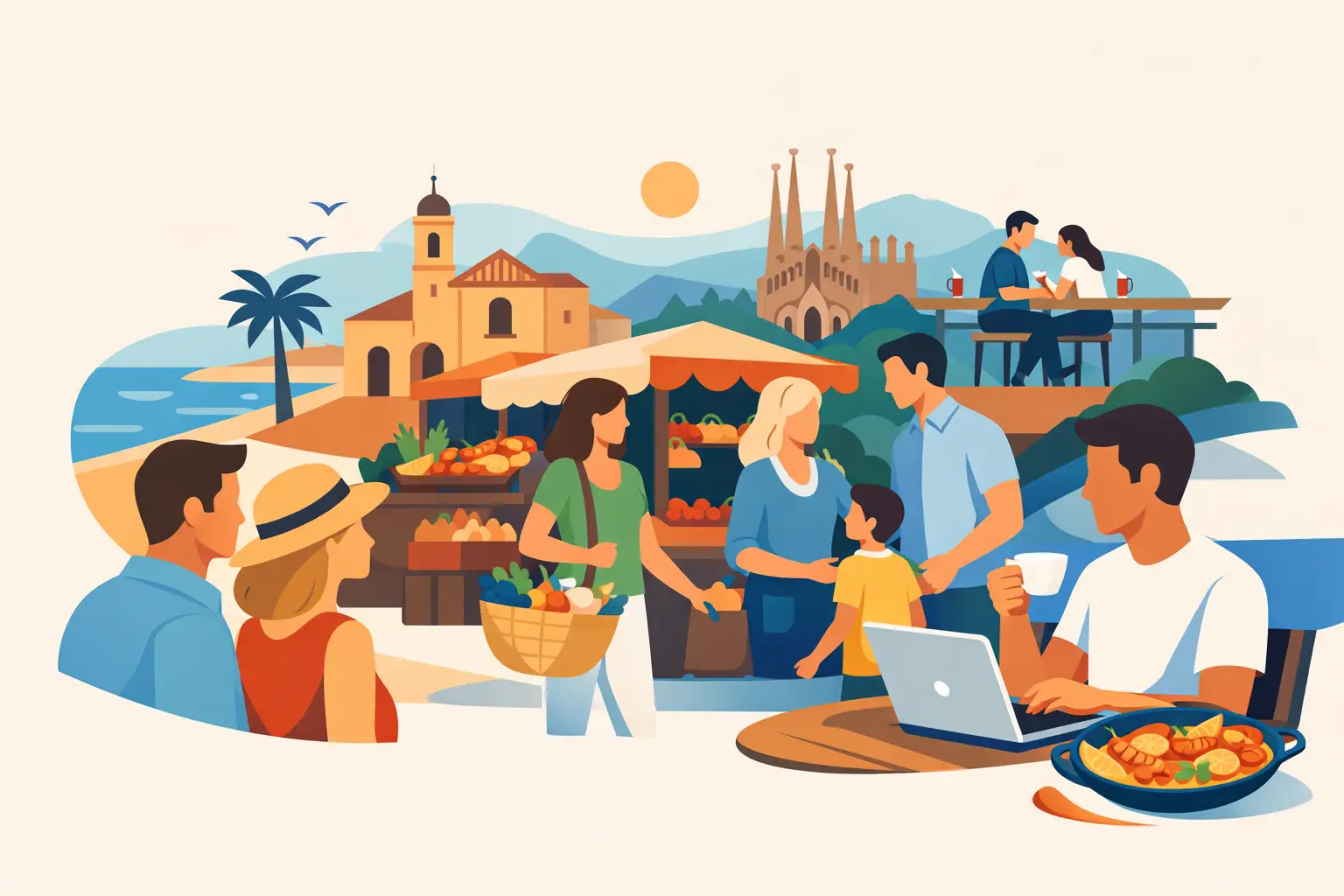
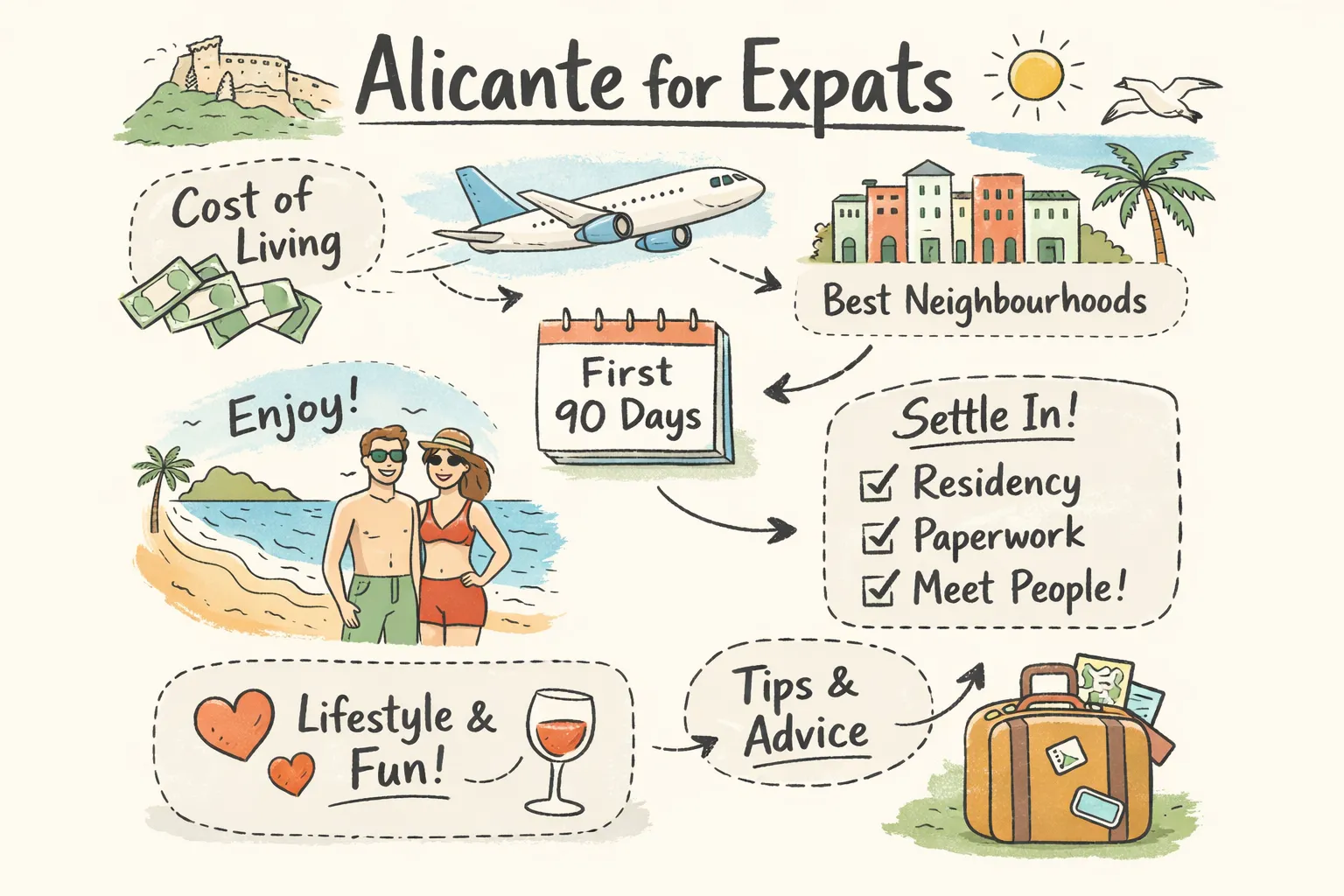
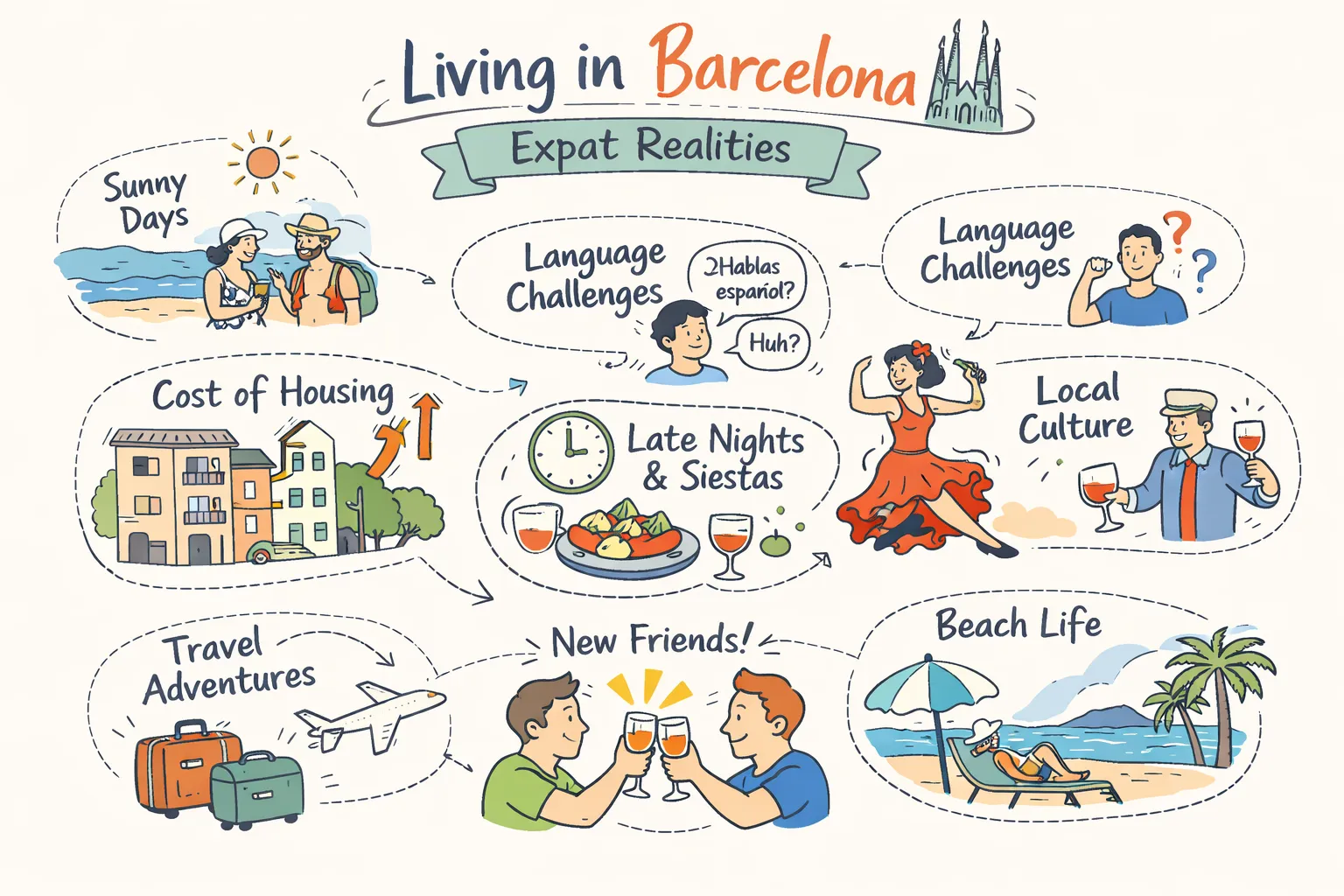
Living in Spain means adapting to a society where time, relationships, and quality of life are valued more than urgency or efficiency. Spain is often romanticized for its climate, food, and lifestyle, but day-to-day living here is shaped just as much by bureaucracy, regional identity, and deeply ingrained social rhythms. For expats, the transition is rarely difficult in obvious ways—but it often requires unlearning habits formed in faster, more rigid cultures.
This guide is designed to help you understand Spain as a place to live long term, not just a destination to enjoy. Whether you are relocating for work, remote income, family life, or retirement, settling well in Spain depends on understanding its pace, its systems, and its unspoken expectations.
Understanding Daily Life in Spain
Daily life in Spain revolves around rhythm. The structure of the day is different from that of many Northern European or North American countries, and adjusting to it is one of the most important steps toward integration. Mornings tend to start later, lunch is a significant pause in the day rather than a quick break, and evenings stretch late into the night.
This rhythm is not accidental. It reflects a cultural emphasis on presence, conversation, and shared time. Meals are social events, not functional interruptions. Family and friendships are central, and work is often treated as one part of life rather than its defining feature.
For expats, this can feel liberating or frustrating depending on expectations. Processes often move slowly, appointments may start late, and last-minute changes are common. This is not usually seen as unprofessional—it is simply normal. Pushing for speed or rigid structure often creates resistance, while patience and flexibility smooth interactions.
Socially, Spaniards are expressive, warm, and direct in conversation, but this openness does not always translate into immediate closeness. Relationships develop over time through repeated interaction rather than formal introductions.
Residency, Visas, and Bureaucracy
Spain’s immigration system is documentation-heavy and often confusing, particularly for non-EU citizens. Residency options vary depending on employment, family ties, investment, study, or non-lucrative income, and each path comes with specific requirements and limitations.
The application process is slow and highly procedural. Appointments must often be booked weeks or months in advance, paperwork requirements can change without notice, and different regions may interpret rules slightly differently. Persistence and organization are essential.
Residency is typically managed at the regional or provincial level, which means experiences can vary widely depending on where you live. What is accepted easily in one city may be questioned in another.
Spain rewards patience in these processes. Attempts to rush, argue, or escalate rarely help. Expats who approach bureaucracy calmly, keep meticulous records, and accept delays tend to navigate the system more successfully.
Housing and Where You Live
Housing in Spain varies dramatically by region. Major cities like Madrid and Barcelona face high demand and rising prices, while smaller cities and rural areas offer far more affordable options.
Most rentals are unfurnished or semi-furnished, and leases are typically long-term. Contracts are formal, but enforcement can be uneven, and clarity around maintenance responsibilities is important from the outset.
Apartments are often older, particularly in historic city centers. Insulation, heating, and soundproofing may not meet expectations shaped by colder climates. Learning to ask practical questions—about heating systems, water pressure, and noise—is crucial.
Neighborhood choice has a significant impact on daily life. Proximity to public transport, markets, schools, and social life matters more than apartment size alone. In smaller towns, integration is easier, but privacy may be limited.
Cost of Living and Financial Reality
Spain offers a relatively moderate cost of living compared to other Western European countries, but this varies widely by location. Housing is the largest expense, particularly in urban centers.
Daily costs such as groceries, dining out, and transportation are generally affordable. Eating out is a normal part of life rather than a luxury, and local markets play a central role in household shopping.
Salaries, however, are often lower than expats expect, particularly outside multinational companies or specialized sectors. Many expats rely on remote income, savings, or pensions rather than local wages.
Taxes are significant, and Spain is strict about tax residency and reporting obligations. Understanding your tax status and seeking professional advice is essential, especially for those with international income or assets.
Healthcare and Public Services
Spain has one of the strongest public healthcare systems in Europe. Residents have access to a comprehensive network of public hospitals and clinics, with most services free or low-cost at the point of use.
Registering for healthcare requires proper residency documentation and local registration. Once inside the system, care quality is generally high, though wait times for non-urgent procedures can be long.
Private healthcare is widely available and relatively affordable. Many expats choose private insurance for faster access or English-speaking providers, particularly during their initial years.
Public services function reliably but slowly. Appointments, paperwork, and follow-ups take time. Understanding that delays are systemic rather than personal helps manage expectations.
Work Culture and Professional Life
Spanish work culture is relationship-oriented and hierarchical, though less rigid than in the past. Personal rapport matters, and trust is built through consistent interaction rather than formal credentials alone.
Workdays can be long, particularly in traditional sectors, but productivity expectations differ from those in highly efficiency-driven cultures. Decision-making may involve multiple conversations and informal consensus-building.
Communication is direct and expressive. Disagreement is not necessarily seen as conflict, but tone matters. Public criticism can damage relationships, while private discussion is more effective.
Work-life balance is valued culturally, though not always realized in practice. Family obligations and personal life are treated as legitimate priorities, and flexibility is often expected on both sides.
Language and Communication
Spanish is essential for long-term integration. While English is spoken in tourist areas and some professional environments, daily life—especially outside major cities—requires Spanish proficiency.
Spanish communication is animated and expressive. Interruptions, overlapping speech, and emotional emphasis are normal and not considered rude. This can feel overwhelming to expats from more reserved cultures.
At the same time, indirect communication is common in sensitive situations. People may avoid saying “no” directly to preserve harmony. Learning to interpret context and tone is as important as understanding words.
Effort to speak Spanish is appreciated and often met with encouragement, even when mistakes are frequent.
Transportation and Mobility
Spain has an excellent transportation network. Public transport in cities is reliable, affordable, and widely used. High-speed trains connect major cities efficiently, making domestic travel easy.
Car ownership is unnecessary in most urban areas but useful in rural regions. Driving culture is generally orderly, though traffic congestion exists in larger cities.
Walking is central to daily life. Cities and towns are designed around pedestrian movement, and many social interactions happen spontaneously in public spaces.
Regional Identity and Cultural Difference
Spain is not culturally uniform. Regional identity plays a major role in language, traditions, and daily life. Catalonia, the Basque Country, Andalusia, Galicia, and other regions have distinct histories and norms.
Language differences are significant. In some regions, local languages are used alongside or instead of Spanish in education and administration. Understanding and respecting this diversity is important for integration.
Political and cultural sensitivities vary by region. Listening more than speaking on these topics is usually wise, particularly as a newcomer.
Safety and Everyday Reality
Spain is generally safe, with low levels of violent crime. Petty theft occurs in tourist-heavy areas, but everyday life is secure.
Public spaces are lively and well-used at all hours, contributing to a strong sense of social presence. Late-night activity is normal and does not usually indicate risk.
The climate affects daily routines. Heat in summer can be intense, particularly in southern regions, influencing work hours and energy levels. Adapting schedules to weather is part of life.
Building a Long-Term Life in Spain
Living well in Spain requires letting go of constant urgency. Systems work, but on their own timeline. Relationships matter more than procedures, and enjoyment is not treated as optional.
Expats who thrive are those who slow down, engage locally, and accept that some inefficiency is the price of a more human-centered way of life. Those who resist the pace often experience unnecessary frustration.
Over time, routines form. Local cafés become familiar, social circles stabilize, and daily life feels less foreign. Spain becomes comfortable not because everything is perfect, but because it feels lived-in.
Final Thoughts
Living in Spain is about rhythm, connection, and acceptance. It is a country that prioritizes quality of life over speed and presence over productivity.
For expats willing to adapt expectations, learn the language, and move at Spain’s pace, the reward is a life rich in social connection, culture, and everyday enjoyment. This guide provides the framework—but truly living well in Spain comes from embracing a slower, more relational way of being.