
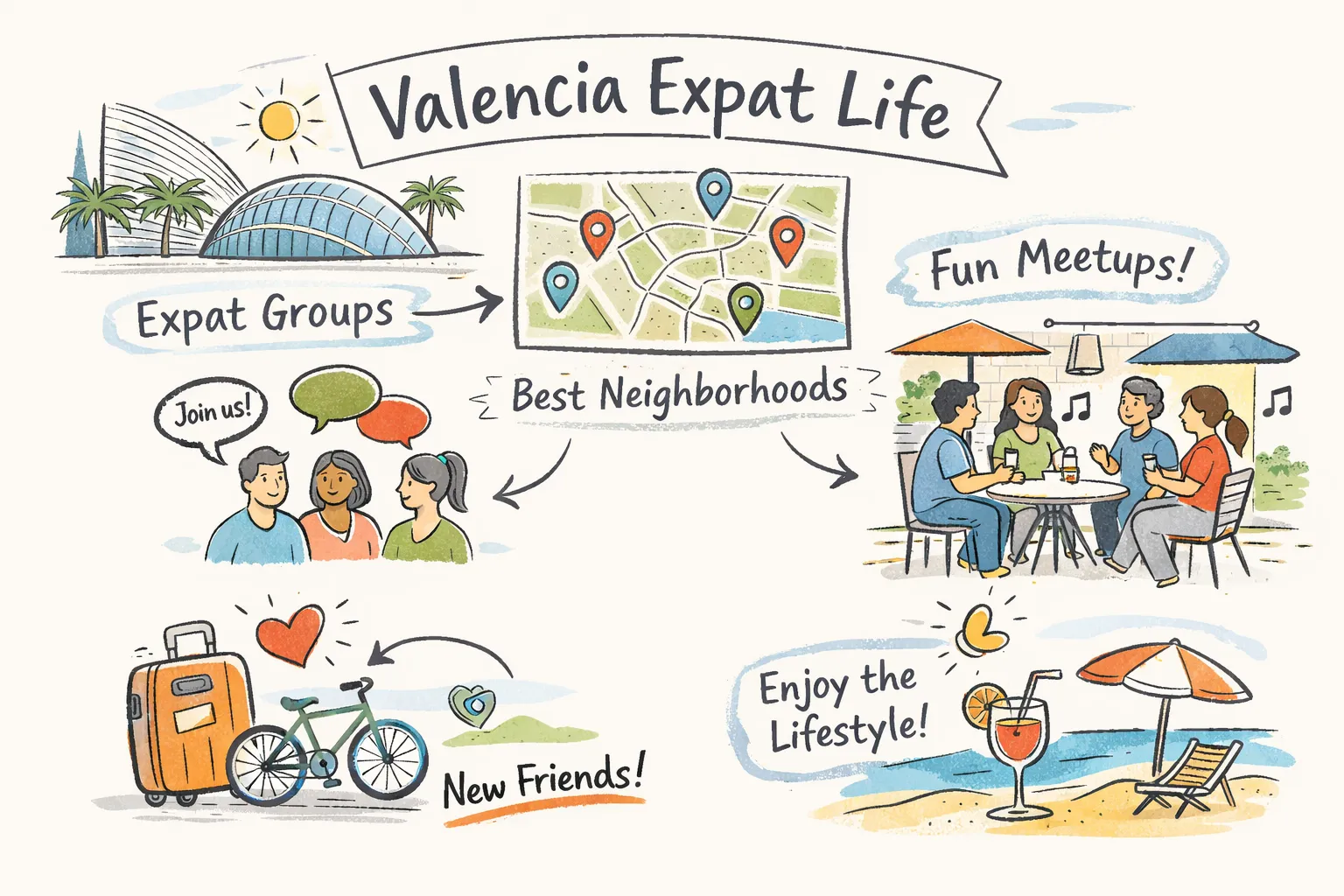
Sun, paella, miles of bike lanes and a rhythm that lets you breathe: Valencia pulls people for a reason. In 2024 it topped InterNations’ list as one of the world’s most welcoming cities for newcomers, and the international scene keeps growing. This guide tells you where the city’s English‑speakers and internationals actually gather, which neighbourhoods match different lifestyles, the real hurdles newcomers face (and how to solve them), plus a practical 30‑day plan to build both a practical support network and a social life.
Think of this piece as your first 72‑hour map plus a 30‑day checklist. Valencia Expat Guide provides the downloadable neighbourhood mini‑guides, printable checklists and a vetted partners directory I reference here — use those PDFs alongside the steps below to stay organized on arrival.
Immediate next move: join the Expats Valencia Facebook group, RSVP to a newcomers meetup, and book a short-term furnished apartment for two weeks so you can view neighbourhoods in person.
Where Valencia’s international community actually gathers (online & offline)
There are two useful patterns to know: big, general groups that act as marketplaces and announcement boards, and smaller, interest‑based or recurring groups that actually create relationships. Use both: the large channels for housing and quick questions, the smaller meetups for repeat social contact.
Key channels to check now — short facts you can verify immediately. Expats Valencia’s Facebook community has more than 70,000 members and is where housing leads and daily questions circulate fast. The Expats Valencia Meetup page and associated events are where the community’s organized, linked activity reaches roughly a 20,000+ active audience. Valencia Social Club runs friendly, regular social events (the group lists a couple of thousand members). InterNations organizes monthly official meetups and themed subgroups for professional networking. There are also nationality‑specific groups (for example “Americans living in Valencia”) and niche local groups for sports, language exchange and families.
Why these channels matter differently: Facebook is immediate — housing leads, contractor recommendations, urgent questions. Meetup tends to host ticketed or structured events (language exchanges, workshops) and gives you a calendar you can subscribe to. InterNations is useful if you want a blend of social and professional events with an organized newcomers format.
How to evaluate a group before you join one: look for recent activity (posts in the last 48–72 hours), pinned rules and how strictly admins enforce them, a clear event calendar, the language blend (English-only vs bilingual) and the tone of posts (helpful vs purely transactional). A friendly, moderated group with recurring events will help you make friends; a chaotic, marketplace‑style page will help you find housing quickly.
Simple how‑to for joining any group: read the pinned rules, follow the sign‑up instructions, and introduce yourself with one short post describing arrival date, neighbourhood preferences and what you’re looking for. Sample post (copy/paste and adapt):
- Hi — I’m Anna, moving from London on May 12th. Looking for housing in Ruzafa or Benimaclet and friendly language exchanges. Any short‑term apartment recommendations or coffee meetups this week?
Safety and privacy: never post passport scans, bank details or your rental contract publicly. Meet new contacts in public places for the first few meetings, and prefer payments through traceable methods. If a listing asks for a large deposit before you see keys in hand or refuses an in‑person meeting, treat it as a red flag.
Which neighbourhood fits you: a quick match for different lifestyles
Decide by applying three filters: budget (how much you want to pay), lifestyle (nightlife, family, proximity to beach), and commute (walkable vs easy tram/bus lines). Walk the area in daylight and again in the evening before you sign anything; the rhythm changes between 10am and 10pm.
Ruzafa (Russafa) — the creative, café‑and‑gallery hub. Expect lively streets, independent restaurants, coworking spaces and a sizeable expat enclave. Pros: excellent social life, good cafés for daytime work, frequent cultural events. Cons: noise, higher rents and competition. Property examples range widely — from modest flats to €170k–€1.7M handovers for renovated options — and rental listings tend toward the upper end of the city average.
El Carmen (Ciutat Vella) — bohemian, historic and central. Narrow streets, bars and direct access to Turia Park make it irresistible for people who want the “old city” feel. It’s one of the pricier pockets: official data put average property values in the zone around €4,059/m² (April 2025). If you want atmosphere and walkability, prepare to pay a premium.
Benimaclet — studenty and affordable. Close to universities and public transport, Benimaclet gives more space for less money and a laid‑back, youthful vibe. It’s noisier during term time but good value for single professionals or those wanting cheaper long‑term rents.
El Cabanyal — beachside with character. Renovation has driven interest here: you get beach access, seafood bars and a rising expat mix at rents that can still undercut central neighbourhoods. Note regionally higher evening foot traffic and a few isolated safety concerns at night — standard city caution advised.
El Pla del Remei (L’Eixample) — upscale, stable and well‑served. Think luxury shopping and quieter streets. Good for families or people seeking a reliable investment and a polished day‑to‑day life; expect higher rents and purchase prices.
Malvarrosa & Patacona — the beach strip for nomads and families who want sand within a short tram or bike ride. Life here is more seasonal; commutes into the city centre are reasonable but check tram connections if you’ll commute daily.
Suburbs: L’Eliana, Rocafort, La Canyada — quieter homes, larger plots, family schools and space for cars. Choose these if you’re bringing children or want more square metres for your euro.
Hard numbers and what they mean: citywide one‑bedroom averages in early 2026 sit around €1,250/month (typical range €900–€1,600), with two‑bedrooms around €1,460. Expect central beachfront or historic neighbourhoods to sit above those averages; areas like Benimaclet and some suburbs will sit below them. For up‑to‑date rental price data see Valencia rent prices.
Try‑before‑you‑sign tip: book a two‑week furnished stay, then spend those days visiting 6–8 apartments across at least three neighbourhoods. Walk routes you’d take daily — to the supermarket, to a café, to the bus stop—both during the day and after 9pm.
Meetups, clubs and recurring events that actually help you make friends
One‑off events are fine for a night out; recurring formats build friendships. Look for formats that repeat weekly or monthly and have small, consistent attendee lists: language exchanges, sports teams, coworking socials and a regular newcomers night.
Useful recurring examples: Expats Valencia and InterNations run dedicated Newcomers events; Valencia Social Club hosts language exchanges like “Social Saturdays” in central bars; sports groups run padel, beach volleyball and group hikes; coworking spaces such as Wayco host after‑work socials that mix professionals and digital nomads. Art workshops, wine‑and‑paint nights, and scheduled walking tours also repeat and help you see the city with other newcomers.
Where to check schedules: the Expats Valencia events calendar, Meetup’s Valencia Expat Meetup group, Facebook Events, and InterNations’ local calendar. Subscribe to event pages and set reminders the week you arrive so you don’t miss the first chance to show up.
How to pick three events in month one: choose one social/newcomers night to meet people, one recurring hobby or sports session to build routine, and one professional or coworking social if you want local work contacts. Showing up twice in the same group in your first month is more useful than attending five different one‑offs.
When you arrive, openers and follow‑ups matter. Short intro on arrival: “Hi — I’m Carlos, I arrived from Lisbon last week and I’m learning Spanish. Love football and coffee; nice to meet you.” After a promising chat, use a short follow‑up message: “Hi Marta, it was great talking at the language meet on Tuesday. Fancy coffee next week at Café de las Horas? I’m free Tue/Thu evenings.” That change—turning a meet into a one‑on‑one—builds real friendships.
Practical etiquette: carry a bit of cash for paying a round, don’t assume everyone speaks English, and be flexible about start times—many local events run late. If an event charges a fee, RSVP early; many groups cap attendance.
The real integration hurdles — housing, bureaucracy, jobs and healthcare (and how to navigate them)
Valencia’s advantages come with administrative friction. Knowing the specific failure points saves time.
Housing — the quick diagnosis: rents have risen and short‑term rental regulation changes have reshaped inventory. Since mid‑2025 Spain requires a national short‑term rental registration (VUD ID) and homeowners’ associations gained more power to restrict tourist rentals; that has removed many illegal listings and nudged some stock back toward medium/long‑term renting, but overall availability tightened. Practical responses: always insist on a written contrato de alquiler, confirm the exact deposit (fianza) and how it’s held, ask for a run of recent energy bills (gives you an idea of running costs), and avoid owners who refuse to meet in person. For complex cases, use a vetted local agent or a gestor to review contracts and translate clauses.
Bureaucracy — the common bottlenecks are NIEs, empadronamiento, residencia paperwork and bank accounts. Start booking appointments early; many municipal slots fill quickly. Documents commonly requested include passport, proof of address (a rental contract or empadronamiento), and appointment confirmations. If forms or rules look inconsistent, a gestor is worth the cost: they know the right office and the exact set of documents the clerk will ask for.
Jobs & work — Valencia’s market favors remote roles, hospitality, tourism and customer service/BPO for international hires. Spanish fluency opens many doors locally; English and other European languages help in hospitality and international companies. Use coworking spaces, local LinkedIn groups and professional meetups as your primary networking channels rather than relying solely on job boards.
Healthcare — public healthcare access requires registration at a centro de salud after empadronamiento. Private insurance covers you immediately and is common for new arrivals while public registration is pending. Ask relocation services for bilingual GP referrals, or check community boards for English‑speaking doctors.
Scams & red flags — be wary of “too good to be true” rents, owners requesting large cash deposits without a contract, or listings with photos stolen from other adverts. Treat properties that cannot be shown in person or owners who avoid identity verification as suspicious. Mitigate risks by arriving in temporary furnished accommodation, visiting multiple properties, and checking owner IDs and property registration details.
Use Moving to Spain as an Expat: Step‑by‑Step Playbook checklists to keep your documents organized (NIE appointment confirmations, empadronamiento certificate, contract copies) so you can present a complete file at bank and health center appointments.
Services that will speed up settling — who to use, when and how much to expect
Pay for help when time is tight, your Spanish is limited, or you have family and need guarantees. For other moves, community resources will usually cover the basics.
Relocation and housing providers: Globexs services for expats offers furnished monthly apartments (1–11 months) in neighbourhoods like Ruzafa, El Carmen and El Cabanyal and has a legal team to help with NIE and residency procedures. La Vidalencia lists transparent starting fees (home‑finding and visa consultation services typically start around €475). Moving2Valencia, Valencia Expat Services and Livin Valencia provide pre‑arrival briefings, viewings and bureaucratic help on a quote basis; ask for itemized services. Expat Legal Spain covers property and tax legal advice for purchases or complex contracts.
Questions to ask any relocation service before you book: what exactly is included (appointments, translations, document filings), the timeline for each element, cancellation and refund terms, references from recent clients, and whether bilingual support is available. Expect basic paperwork help to start at a few hundred euros; full home‑finding and settlement packages will cost more and are typically quoted after an initial needs assessment.
Free and low‑cost alternatives include volunteer‑run Facebook housing boards, community referrals inside Expats Valencia, and coworking space introductions. Use paid services to validate offers and quote comparisons — cross‑check any price against the vetted partners directory available through Expats World.
A simple 30‑day action plan: from arrival to a practical support network
- Days −30 to 0 (pre‑arrival): Join two expat groups (one Facebook, one Meetup), bookmark 5 apartments, book a 2‑week furnished stay, order a local SIM to pick up on arrival, and print a documents checklist (passport copy, rental confirmations, any appointment emails).
- Week 1: Register your empadronamiento, open a basic Spanish bank account, register with a centro de salud or secure private insurance, and attend one newcomers meetup plus one guided walking tour of your top two neighbourhoods.
- Week 2: View long‑term apartments with a short list of priorities, sign a lease or extend your temporary stay, start NIE/residency appointment bookings or hand paperwork to a gestor, and join a language exchange or hobby group that meets weekly.
- Weeks 3–4: Finalise utilities and internet, commit to a coworking space or a weekly sports/social slot, arrange at least two recurring social activities (a language partner and a weekend sports or cultural group), and assemble a contact list of 8–10 useful people (agent/landlord, GP, gestor, two social allies).
Printable priority reminder: first secure an address, get empadronamiento, and register for health coverage. Use the Expats World 30‑day checklist to tick these off in order and keep appointment confirmations in a single folder (digital + paper).
How to turn acquaintances into close local friends — practical social strategies
Friendships form through repetition and small reciprocations. The single biggest predictor of whether someone becomes a close contact is whether you see them more than once in a low‑pressure setting.
Show up consistently to the same events and invite people to simple activities: coffee, a short beach walk, or tapas after a language meet. Host one small dinner (no more than six people) — pick a simple, shareable menu: a large tortilla, a salad, a plate of jamón and olives and a bottle of wine. Ask guests to bring something small; that lowers your hosting burden and makes the invite feel mutual.
Short scripts that work: “I loved our chat at the meet‑up — would you like to grab coffee next Tuesday?” or “We play beach volleyball every Sunday morning; would you like to join this weekend?” Follow‑up within 48 hours after meeting someone promising; people forget otherwise.
Cultural notes: practice patience with your Spanish learning curve, accept that dinners run late, and respond to local invitations even if they’re different from what you’d normally do. If you’re struggling with loneliness or reverse culture shock, find a recurring community group and consider professional support — many expat networks share therapist referrals.
Quick resources, FAQs and next steps
Three immediate actions: join one Facebook group today (Expats Valencia), RSVP to a newcomers event this week, and secure a short‑term furnished apartment for your first two weeks in the city. Use those two weeks to test neighbourhoods and meet people.
Downloadable assets available from Expats World: neighbourhood mini‑guides for Ruzafa, Benimaclet, El Cabanyal, El Carmen and El Pla del Remei; a 30‑day checklist; an NIE & empadronamiento cheat‑sheet; and a pack of sample messages you can copy into groups. For broader Spain‑level advice see the Expats Guide for Spain, and if you’re considering other cities also check the Alicante Expat Guide and the Seville Expat Guide.
FAQ — quick answers
Is Valencia safe? Yes. Valencia is generally safe for newcomers; normal city caution after dark and common‑sense measures around belongings are sufficient. Some areas near the beach have occasional night‑time nuisances — stay aware.
Do I need Spanish? No for day‑to‑day basics in many expat circles, but yes for broader work options, bureaucracy and deeper local friendships. Aim to learn basic Spanish in your first six months.
How much should I budget for rent? Plan for roughly €900–€1,600 for a one‑bedroom centrally (city average near €1,250 in 2026). Suburbs will be cheaper; premium historic or beachfront pockets higher.
Where do I find English‑speaking doctors? Use community referrals, relocation services, or the bilingual doctor lists some agencies provide. Registering at a centro de salud is your route to public care after empadronamiento.
If you want ongoing Valencia updates, downloadable neighbourhood PDFs and the printable checklists mentioned above, subscribe to Expats World for weekly briefs tailored to newcomers. Use those resources to validate offers, compare relocation quotes and keep your paperwork tidy.
Valencia’s social life rewards the patient and the persistent: show up, pick a few repeat activities and test neighbourhoods in person. You’ll find your rhythm. Welcome to the city — we’ll meet you where the bike lanes meet the sea.