
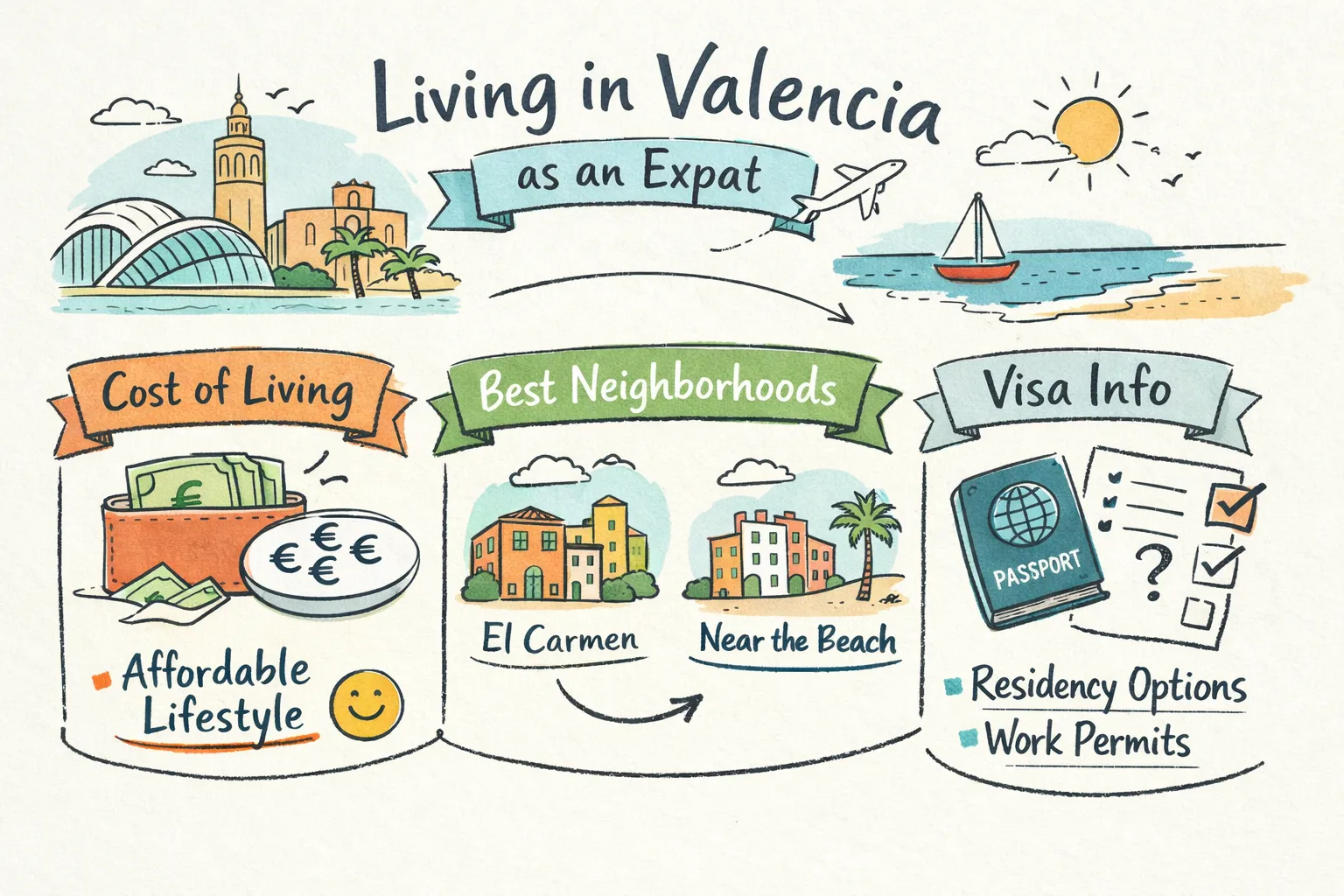
This is a practical, experience‑first city guide from Expats World: compact verdict, realistic budgets, the neighbourhood that will fit your routine, precise residency and rental steps (NIE/TIE and lease traps), where to find work and schools, plus a printable 90‑day checklist with templates you can reuse. Read this and you’ll leave with a clear monthly budget, a neighbourhood shortlist, and an admin roadmap that works in the real Valencia.
Is Valencia right for you? — Expats World’s quick verdict
Valencia suits people who want the rare mix of city life and accessible beaches: digital nomads who value cafés and coworking between swims, families after quieter neighbourhoods and parks, and cost‑conscious movers who want Mediterranean climate without Barcelona prices. If your career depends on very high salaries in niche industries or you need an English‑only corporate role, compare options first — many higher-paying local jobs expect fluent Spanish.
Climate, cost and lifestyle are the big pluses; the tradeoffs are Spanish-language preference for many roles and occasional bureaucratic waits for appointments. After reading this you’ll have a realistic monthly budget, a neighbourhood matched to your priorities, the exact admin steps to get legal and online, where to look for work and schools, and a 90‑day settling plan with templates.
What living in Valencia actually costs: sample monthly budgets and how to save
Headline numbers: a single person living comfortably should plan on about €1,900–2,000/month. A family of four aiming for a similar standard should budget roughly €3,500–4,000/month. The largest variable is rent: location and whether you choose a long‑term lease or shared housing change totals significantly.
For independent cost comparisons and a detailed moving budget, see Expatistan’s cost of living data for Valencia and this cost of moving to Valencia (2026 budget breakdown) for a step‑by‑step moving budget.
| Category | Single (€/month) | Family of Four (€/month) | Notes |
|---|---|---|---|
| Rent | €900–1,600 | €1,400–2,200 | Center premium (Ruzafa) vs outskirts (Campanar) |
| Utilities & Internet | €150–200 | €200–300 | Winter electricity spikes possible |
| Groceries | €200–400 | €600–800 | Local mercados cheaper than supermarkets |
| Transport | €30–50 | €50–100 | Monthly pass or bike culture savings |
| Leisure & Dining | €200–400 | €400–700 | Festival months push costs up |
| Total (mid‑range) | ~€1,900–2,000 | ~€3,500–4,000 | Excluding one‑off set‑up costs |
Category notes that matter
Rent: Expect about €900–1,600 for a one‑bedroom in the city depending on area. Ruzafa and Old Town push towards the top of that range; suburbs such as Campanar and Quatre Carreres are noticeably cheaper. Family apartments (2–3 beds) usually range €1,400–2,200.
Utilities & bills: Electricity can spike in winter if you rely on electric heating. Typical combined bills (electricity, water, gas, internet) run €150–200 for a single and a little more for families. Choose a fixed‑price internet plan and compare energy providers before signing to avoid surprises.
Groceries: Shopping at weekly mercados (Central Market, Russafa market) cuts costs 20–30% compared with big supermarket chains. If you cook most nights, budget €50–90/week for a single and €150–200/week for a family.
Transport: A monthly public transport pass is cheap (€30–50). Valencia is flat and bike friendly — many expats save by cycling and using the city’s rental bikes (Valenbisi) for short trips.
Leisure & dining: Restaurant meals typically range €12–25 depending on place. Nightlife and festivals (Las Fallas season is an obvious outlier) make certain months more expensive; plan extra for April if you love local cultural life.
Health insurance & one‑offs: If you rely on private insurance as a non‑EU resident expect €50–150/month per adult. Initial one‑off costs — first/last month’s rent, deposit (1–2 months), agency fees and basic furniture — can add €3,000–6,000 depending on your choices.
Three thumbnail budgets
Frugal: Share a 2‑bed apartment on the edge (Benimaclet or Campanar), cook at home, cycle for transport. Rent €600–850, non‑rent costs ~€600; total ≈ €1,200–1,450/month.
Comfortable: One‑bed in a lively neighbourhood (Ruzafa/Benimaclet), a few nights out monthly, occasional weekend trips. Rent €1,150–1,400; non‑rent ~€700; total ≈ €1,900–2,100/month.
Premium: Central 1–2 bed, regular dining and cultural outings, private health insurance. Rent €1,600+; non‑rent ~€900; total ≈ €2,500+/month.
Quick saving tactics
Share housing for the first months, choose a neighbourhood outside the absolute center, buy at mercados, join a coworking plan only if you use it consistently (many cafés suffice for occasional work), and lock in energy deals outside the variable tariffs during the move‑in process.
Choose your neighbourhood like a local: who fits where
Your neighbourhood shapes daily life in Valencia — not just rent. Proximity to the Turia Gardens, the beach, schools or coworking will determine commute, weekend routines and noise levels. Below are practical profiles so you match lifestyle to streets.
For a more detailed, neighbourhood‑by‑neighbourhood breakdown consult this guide to the best neighbourhoods in Valencia city when you narrow your shortlist.
Ruzafa (Russafa)
Vibe: Creative, international and full of cafés, design stores and coworking spaces. Ruzafa works well if you want quick social life, easy networking and short bike rides to the Turia and the beach.
Who it fits: Young professionals, remote workers and people who prize cafés and events. Expect lively evenings; if you value quiet after 11pm, check sound insulation at viewings. Typical 1‑bed rent: €1,100–1,500.
El Carmen / Old Town
Vibe: Medieval streets, tapas bars and a constant cultural hum. El Carmen is atmospheric but touristy in parts; narrow lanes mean parking is difficult and apartments vary greatly in natural light.
Who it fits: Culture lovers and people who want to be in the historic heart. Good for short‑term stays or those who trade convenience for character. Typical 1‑bed rent: upper city range.
El Cabanyal & Patacona
Vibe: Coastal neighbourhoods with fish markets, relaxed esplanades and a more affordable edge compared to the center. El Cabanyal has undergone steady gentrification; Patacona is quieter and family‑oriented.
Who it fits: Beach lovers, families and people who prefer evenings by the sea. Expect cheaper rents per square metre than central districts and easy access to Malvarrosa beach.
Campanar
Vibe: Suburban, calm and family friendly with parks and modern apartment blocks. It’s more residential, with fewer cafés but better value for space and schools.
Who it fits: Families and people prioritising quiet, green space and larger flats. Commutes to central hubs are straightforward by tram or bus. Typical 1‑bed rent: €900–1,200.
Benimaclet
Vibe: Studenty, community‑minded and affordable. A strong local identity, independent shops and good transport links make it a favourite for longer stays.
Who it fits: Budget-conscious movers, students, and people who want a neighbourly scene with easy access to university and city services. Typical 1‑bed rent: €1,100–1,400.
Quatre Carreres
Vibe: Functional, with proximity to Turia Gardens and Ciudad de las Artes. It’s practical rather than trendy — good schools and modern infrastructure.
Who it fits: Families and professionals who want convenient amenities and moderate rents. It’s a compromise between cost and access to central leisure spots.
Practical matching guide
If you want buzzing cafés and coworking → Ruzafa. If you want culture and old‑city charm → El Carmen. If you want beach life → El Cabanyal/Patacona. If you want family parks and space → Campanar/Quatre Carreres. If you want budget + community → Benimaclet.
Micro‑hacks: Hunt for apartments after 10am (natural light check); visit in the evening to assess noise; ask brokers which floor the property is on (top floors are hotter in summer). Apartment‑hunt windows: August is quieter, but you’ll find more listings in September when students move.
Visas, NIE, residency and work permits — a step‑by‑step playbook
Two quick definitions: the NIE is your foreigner identification/tax number (useful for banking, contracts, phone plans). The TIE is the physical residency card for non‑EU residents staying more than six months. The order matters: get the NIE first, then arrange residency/TIE if you need it.
EU citizens
Sequence: arrive, register with the town hall (empadronamiento), apply for the EU residence certificate if staying beyond three months (where required), open bank accounts and start work. Documents typically include your passport/ID, empadronamiento certificate, proof of employment or sufficient funds and health coverage. Timings are quick — empadronamiento can often be done the same week; certificate appointments vary.
Non‑EU citizens
Sequence: choose the correct visa (work, student, non‑lucrative, or digital nomad), apply at your consulate, travel to Spain with visa, book a local NIE cita previa, and then request TIE fingerprinting at extranjería/police. Processing windows vary; consulate processing can take 1–3 months and local appointments for TIE another 1–3 months — start early and keep copies of all receipts.
Documents checklist (printable)
- Passport (original + photocopies of all pages)
- Completed EX‑15 (for NIE) and Modelo 790/012 fee receipt
- Visa approval or employment contract (if applicable)
- Proof of funds/bank statements and private health insurance (if required)
- Birth/marriage certificates (apostilled and translated if requested)
Common pitfalls: using out‑of‑date EX forms, missing the fee payment receipt, or waiting too long to book cita previa for fingerprinting. Fix: keep a folder of originals + color scans and set two calendar reminders for all appointments.
Quick timeline to follow after arrival: in week one secure temporary housing and book your NIE appointment; in week two attend empadronamiento and pay any needed tasa receipts; in month one complete bank setup and follow up on TIE fingerprinting windows — treat appointments like flights, and plan backups.
For practical step‑by‑step advice on obtaining the NIE in Valencia, see this guide on how to get the NIE in Valencia: how to get the NIE in Valencia. For official instructions about applying for the TIE and related procedures, consult the university’s summary of applying for a TIE (foreigner ID card).
Renting in Valencia without surprises: contracts, deposits, landlord expectations
Spanish rental law (LAU) offers tenant protections but the practical workflow remains local: search, view, apply, sign, move in. Expect one‑year contracts that renew automatically and a security deposit commonly of 1–2 months lodged with the Generalitat Valenciana.
Key contract elements to check
- Contract duration and renewal terms (minimum/notice periods)
- Deposit amount and refund conditions
- Inventory and condition report at move‑in
- Who pays community/utility charges
- Early termination clauses and penalties
Landlords will ask for NIE/passport, payslips or proof of income (rent usually capped at ~30–40% of salary), and sometimes a guarantor. If you don’t yet have NIE, provide passport, a recent contract offer and bank statements; many owners accept those temporarily. Deposit norms: one month for standard LAU leases, often two months in practice.
Move‑in checklist
- Take timestamped photos of every room and meter readings; email them to your landlord/agency immediately
- Get a signed inventory and deposit receipt
- Register utilities in your name or document who pays what
- Obtain a copy of the signed lease and receipts for all payments (first/last deposits, agency fees)
Where to look: Idealista and Fotocasa are the main marketplaces. Spotahome and trusted agents (local relocation specialists appear on expat forums) are useful for furnished short‑to‑medium stays. Expats World maintains curated lists of reliable listing sources and viewing checklists to speed this stage.
Negotiation & safety: ask for the contract to specify the exact utilities included, never transfer large sums before signing, and watch for listings that advertise “long term” but actually have tourist licences (these lack tenant protections).
Where the work is and what you can expect to earn
Valencia’s job market is mixed: hospitality and tourism are perennial employers, teaching provides steady English‑language roles, startups and tech hubs offer higher wages for specialised skills, and freelancing/remote work is popular among internationals.
Teaching: There is steady demand for English teachers. Public and private school roles vary; expect salary ranges around €23,000–42,000 annually depending on role and contract. TEFL/CELTA helps for academy work and private lessons boost income.
Tech & startups: Entry and support roles (customer support, junior dev) start in the mid‑20sk; specialised devs and product roles can reach €45k–85k+ depending on experience. Use local meetups, LinkedIn and recruit firms (Adecco, Randstad) to surface openings.
Hospitality: Seasonal, flexible and lower‑paid but good for short‑term arrival. Language skills increase opportunities and pay. Freelancers: register as autónomo if you plan regular freelance income — factor in social security costs of roughly €300+ to start.
Practical job hunt: tailor your CV to Spanish norms (short, factual), list Spanish or multilingual skills clearly, and emphasise remote/work‑from‑home flexibility if applicable. For salary negotiation, benchmark with local recruiters and justify remote allowances (home office, travel) if your pay is below range.
Settling in fast: registration, healthcare, schools, banking and everyday life
Once housing and NIE are in progress, queue these administrative items: empadronamiento (town hall registration), bank account, health registration and school enrolment (if relevant). Empadronamiento unlocks access to public healthcare and is often required for the TIE process or school places.
Healthcare: If you are employed and paying into social security, public healthcare access is automatic once registered. Non‑EU residents often start with private insurance and switch once public coverage is confirmed. To find a GP, register at the local health centre (Centro de Salud) using your empadronamiento and NIE.
Banking & utilities: Spanish banks ask for NIE/passport, proof of address (empadronamiento or lease) and a tax ID. Challenger banks (N26, Revolut) are quick for day‑to‑day use, but a Spanish bank account is necessary for many contracts and payroll. Schedule electricity and internet setup early; providers can take 7–14 days.
Schools: Public schools depend on catchment and empadronamiento, while international and private schools have tuition bands and waiting lists. Prepare translated birth certificates and vaccination records when applying. Start applications early — some good international schools fill fast.
Everyday life tips: get a local SIM (Orange, Movistar, Vodafone or low‑cost options), shop weekly at markets for fresh produce, learn basic recycling rules (bins for glass, paper/card, organic), and join local expat groups on Facebook or Meetup to speed practical questions and find community events. For organised meetups and local groups see the Valencia expat community groups & meetups page.
Your 90‑day checklist, sample budgets, local hacks and resources
A clear timeline keeps momentum. Below is a compact sequence that people who settle quickly tend to follow — use it alongside the downloadable templates from Expats World (budget spreadsheet, NIE/TIE email templates, landlord enquiry script and move‑in checklist).
Pre‑move (3 months out)
Decide on neighbourhood priorities, start the apartment search, collect and apostille documents for visas, and book a consulate appointment if needed. Build a basic budget using the sample spreadsheet. If you want a full pre‑move checklist, consult the Ultimate Pre‑Move Checklist for Expats for a ready template pack.
Arrival — Day 0–7
Use short‑term accommodation while you view apartments. Book NIE cita previa and police/TIE appointments immediately, register at the town hall if possible, open a basic bank account, and get a local SIM. Visit a mercado to familiarise yourself with prices and local food options.
Weeks 2–4
Finalise a long‑term rental, complete move‑in checks and inventory, set up utilities and internet, enrol children or start school search, and register with a GP. Begin language classes — a little Spanish speeds daily life dramatically.
Months 2–3
Collect TIE card if applicable, register for social security if employed (or set up autónomo for freelancers), intensify networking and job applications, and join local communities to build routines. By day 90 you should have most admin done and a settled home base.
For practical help on setting up quickly after arrival, Expats World’s Setting Up Life Abroad in Your First 30 Days article has a stepwise first‑month plan you can follow alongside this guide.
Downloadables and resources: Expats World offers a Valencia template pack (budget spreadsheet, NIE/TIE appointment email, landlord enquiry template, move‑in photo checklist). Use them to save time and avoid common mistakes such as paying deposits before signing or confusing seasonal listings with long‑term rentals.
Conclusion — two things to remember and next steps
First: housing determines your budget and lifestyle — pick the neighbourhood that matches daily routines, not just Instagram screenshots. Second: start administrative steps (NIE/empadronamiento) in your first week and keep copies of every receipt.
Use the 90‑day checklist and the sample budgets to plan your move. For downloadable templates and deeper city checklists, visit Expats World’s Valencia Expat Guide — or contact us for tailored guidance to speed up your Valencia move. If you’d like to compare other Mediterranean options before you commit, our Nice Expat Guide is a useful side‑by‑side reference.