
Quick orientation
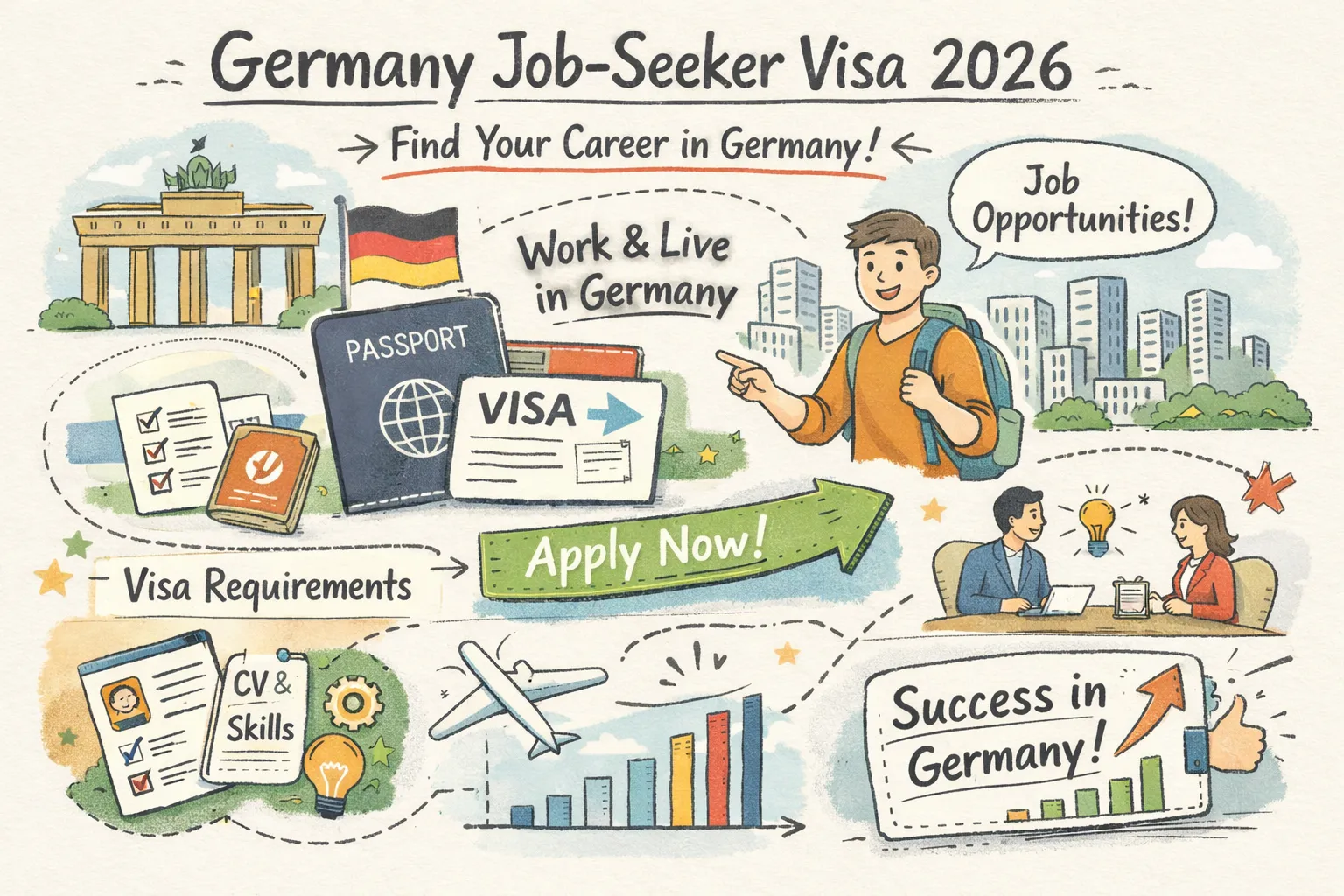
By the end of this guide you’ll know whether the Germany job‑search route fits your profile, what documents to assemble for a visa appointment, how to apply, and the concrete steps to convert your arrival visa into an employment permit or EU Blue Card. This is a field‑tested workflow from Expats World — download the embassy checklist and templates referenced below to save time at the consulate.
Is this the right route for you? A 60‑second self‑screen
There are three pathways people commonly look for when they want to move to Germany to find work. Use this quick test to choose where to focus your energy.
Path A — German‑trained graduates and vocational trainees: If you completed a full university degree or recognised vocational training in Germany, you generally qualify for an extended 18‑month job‑search period. Key requirement: the qualification must have been completed in Germany (not just credits earned here).
Path B — Skilled workers without German degrees (Opportunity Card): If you trained outside Germany but meet points-based criteria for skilled workers, the Opportunity Card is the main route in 2026. It’s a points system and allows part‑time work while you search — check eligibility closely on Make it in Germany or with your embassy.
Path C — Legacy/short job‑search options and edge cases: Older 6‑month job‑seeker visas still appear in guidance and can sometimes apply to very specific professional profiles. In 2026, avoid this route unless your embassy explicitly confirms it for your situation.
Micro decision flow: if you completed studies or vocational training in Germany → go to §2 (Qualifications & recognition). If you trained outside Germany and want to explore a points-based route → jump to §5 (Application process) for Opportunity Card rules, then §6 (landing) and §7 (converting to work permit). If you’re unsure which category you fall into, contact your nearest German mission or use Expats World’s recognition checklist before booking an appointment.
Pro tip: The most common mistake is applying under the wrong route because applicants assume “job search” is identical across visas. Verify where your degree was awarded and whether it’s recognised in Germany before you prepare documents.
Qualifications, recognition and language — what counts
German authorities need to see that your formal training is equivalent to their system. There are three practical steps to proving equivalence.
First, check Anabin and the ZAB database. If your university or qualification appears as equivalent in Anabin, print the entry and include it with your application. If it’s not listed, apply for an official recognition statement (Anerkennung) from the competent German authority; include proof of that application in your file.
Second, for vocational awards there’s a formal Anerkennung process: show your final certificate plus the acknowledgement letter or a request‑in‑process confirmation. Consulates accept either a positive recognition certificate or evidence that a recognition request is pending.
Third, regulated professions require extra steps. For doctors, dentists, pharmacists and many healthcare professions you will need Approbation or a licence — this often requires higher language levels (B2/C1) and separate approvals from the regional authority. Check the competent recognition body for your profession (e.g., Ärztekammer for doctors).
Language expectations: Many vocational tracks expect B1; regulated and client-facing professions usually expect B2 or C1. If you don’t yet have the required German level, include a realistic study plan in your motivation letter (course provider, intensity, timeline). Consulates prefer honest, specific plans to vague promises.
Quick examples:
Software engineer with a foreign master’s: provide degree, transcript, Anabin positive entry or ZAB equivalency, a concise CV with projects, and employer‑target list. No formal Approbation required; English often accepted in IT roles.
Nurse trained outside the EU: include diploma, proof of Anerkennung application, Approbation steps, proof of B1/B2 German depending on the region, and any bridging course enrolment.
Embassy‑ready documents — the full checklist and how to present them
Consulates make decisions on clarity and credibility. Present a tidy, complete file that answers the question: can this person support themselves while actively searching and do they have a plausible plan?
- Completed national visa (Type D) application form — printed, signed; include the appointment confirmation.
- Valid passport — original plus two sets of photocopies of biographical pages; photos must be biometric (35×45 mm).
- Curriculum vitae (CV) — reverse‑chronological, German or English; list attachments as “Anlagen.” Include a short motivation/cover letter (one page) outlining your job search plan, target cities and three concrete companies or job types.
- Diplomas, transcripts and recognition evidence — originals and copies; attach Anabin/ZAB printouts or Anerkennung certificates.
- Work references and employment certificates — signed, on company letterhead; English is acceptable if translations are provided when required.
- Proof of funds — blocked account confirmation (Sperrkonto), Verpflichtungserklärung, or sponsor statements with bank evidence.
- Health insurance — travel/entry insurance covering the first 90 days (minimum €30,000 coverage) and a note explaining your plan for long‑term coverage.
- Proof of accommodation — rental contract, hotel reservation, or invitation letter with host’s passport copy and address.
- Police clearance — only if requested by your mission; include marriage/birth certificates for family applicants when relevant.
Presentation matters. Bring originals plus two full photocopy sets, group documents in a labelled folder, and add a one‑page index at the front listing each document and its purpose. When translations are required, use certified translations and attach the translator’s statement. If a recognition decision is pending, include the acknowledgement receipt from the recognition office — embassies accept “in process” evidence if it’s official.
Sample motivation lines that help: “I will target software engineering roles in Berlin and Munich with a focus on backend development. I will apply to 10 roles per week, attend two meetups monthly, and aim to secure interviews within 60 days.” Visa officers look for concrete targets, realistic timelines and evidence of activity (applications already submitted, meetups registered, recruiter contacts).
Money and accommodation — blocked accounts, sponsors and realistic budgeting
Authorities must be convinced you can support yourself. In 2026 the practical benchmark for blocked accounts is €1,091 per month — commonly shown as €13,092 for a 12‑month deposit. Confirm the required total with your local embassy before transfer; amounts may vary by mission and visa duration.
Accepted proof of support: a Sperrkonto (blocked account) confirmation showing the deposited amount and IBAN, a Verpflichtungserklärung (declaration of commitment) from a German resident, recent bank statements that prove savings, or a formal sponsor letter paired with the sponsor’s income evidence. Sperrkonto is the most straightforward and widely accepted method.
What the Sperrkonto printout must show: your full name (matching passport), account number/IBAN, available balance or deposit amount, bank name, and the date the funds were posted. The embassy expects the confirmation to be stamped or clearly generated by the provider — screenshots of pending transfers are not sufficient.
How to open a blocked account: providers include specialized fintechs and traditional banks (common providers in practice are Fintiba, Expatrio and major German banks). Typical requirements are passport copy, application form, and proof of identity; transfers often take a few business days to two weeks to clear. Order the embassy confirmation PDF and print it; do not rely solely on email receipts. For a practical overview of blocked account rules and documentation expectations, see this blocked account (Sperrkonto) guidance.
Accommodation evidence: a signed rental contract with landlord name and address or a hotel booking for the first weeks. An invitation letter from a friend or host with their passport copy and address is acceptable for provisional stays. If you only have short‑term accommodation, explain in one sentence where you plan to look for a long‑term flat and how soon.
Budgeting—practical ranges: small towns €1,200–€1,800/month; medium cities €1,500–€2,200/month; large cities (Berlin, Munich) €1,800–€2,800+/month depending on lifestyle. For embassy math, multiply your estimated monthly need by the number of months you plan to show and include a simple spreadsheet as evidence (monthly rent, food, transport, insurance, contingency).
The application process step‑by‑step: booking, fees, interview and timing
Apply for a Type D national visa at the German embassy/consulate or visa centre responsible for your residence. Mission websites list exact document translations, appointment systems and local service partners; always check there first.
Booking strategy: schedule your appointment 6–12 weeks ahead. On the day bring originals, two photocopy sets, and printed forms. Expect a short interview focusing on your plan, recognition status and proof of funds. Visa fees for national long‑stay visas are typically around €75 for adults; pay whatever your mission requests and keep the receipt — confirm the current visa fees on your mission’s site before payment.
Processing windows vary but commonly range from 4–8 weeks for a complete job‑search application. If a case needs extra verification (recognition, police checks), processing can extend. If your application is delayed, send a polite status email quoting your file number; do not rebook non‑refundable travel until you have a decision.
Common reasons for refusal and fixes: Missing recognition proof: fix by submitting Anabin/ZAB evidence or the Anerkennung receipt. Insufficient funds: top up your blocked account or provide a Verpflichtungserklärung. Vague job plan: add a one‑page job list with URLs, recruiters contacted, and scheduled interviews. Inconsistent documents: reconcile dates and signatures, provide notarised translations where required.
Interview tips: answer honestly and specifically. Say which roles you’ll apply for, name three target companies and explain how you’ll get interviews (recruiters, alumni networks, job portals). Bring proof of any applications already submitted.
Once you land: registration, insurance and the first‑weeks plan
Arrival actions in order: register your address (Anmeldung) within two weeks; you’ll receive a confirmation needed for almost everything that follows. Request your tax ID (Steueridentifikationsnummer) immediately after Anmeldung — employers need this. Open a local bank account and upload your blocked account conversion or closing steps if applicable. Switch from short‑term travel insurance to long‑term statutory or private health insurance depending on your later permit.
Before your Ausländerbehörde appointment to convert the visa, gather your passport, job contract, employer confirmation letter, proof of degree/recognition, Anmeldung, health insurance confirmation, biometric photos and existing visa. Book the Ausländerbehörde slot as soon as you have a signed contract; slots can take weeks.
Work while searching: the rules differ by route. The Opportunity Card allows part‑time work up to 20 hours/week. Traditional job‑search visas generally prohibit regular work, except short trial work of up to 10 hours/week if authorised. Always confirm with the visa label and your local authority before starting paid work.
Practical set‑up checklist: buy a local SIM, set up email notifications on job portals, join relevant meetups and alumni groups, and keep a job‑search log that records applications, contact names, dates and outcomes — this log is often useful at Ausländerbehörde or in follow‑up visa discussions.
From offer to residence permit (work permit or EU Blue Card)
Convert your arrival visa to a residence permit at the local Ausländerbehörde once you have a job offer. Don’t let your job‑seeker visa expire without starting this process.
When to act: obtain a signed employment contract, then book an Ausländerbehörde appointment immediately. You may need to wait for a slot; start this as soon as you sign.
Core documents for conversion: passport, current visa, biometric photos, signed employment contract (with salary stated), employer confirmation/registration, proof of degree/recognition, Anmeldung, proof of health insurance, and recent payslips if available. Employers must register you with social security once you start.
EU Blue Card basics (2026): the general threshold is €50,700 gross/year and the shortage‑occupation threshold is €45,934.20 gross/year. A recognised degree is required. Confirm the current thresholds before negotiating salary — they adjust annually and impact whether you qualify for the Blue Card or a standard work permit. See the published update on the 2026 EU Blue Card salary thresholds when you prepare offer negotiations.
Timing: conversions often take a few weeks to a couple of months depending on local workload. If your first contract is temporary, the authorities will issue a time‑limited residence permit; this still counts toward long‑term residence if you meet contribution and employment duration requirements later.
Red flags to avoid: accepting a role significantly below your qualification level can block Blue Card eligibility; missing recognition documents will slow the process; and gaps in health insurance may lead to refusals. For settlement, note the general path: several years of employment and contributions are required for permanent residency — exact durations depend on the permit and your integration level.
30/60/90‑day job search plan, final checklist and how Expats World helps
Concrete 30/60/90 plan:
Days 1–30: complete Anmeldung, open a bank account, switch insurance, adapt your CV and cover letter to German standards, register on StepStone, LinkedIn and XING, and create a list of 50 target employers with URLs and application contacts.
Days 31–60: apply broadly (aim for 10–15 tailored applications per week), attend at least two meetups or networking events, contact recruiters, and start short, intensive German classes if needed.
Days 61–90: focus on interview preparation, schedule mock interviews, follow‑up on initial applications, negotiate offers with Blue Card thresholds in mind, and prepare Ausländerbehörde documents for conversion.
Final one‑page embassy and arrival checklist (must‑have at appointment and in your hand luggage): passport + copies, application form, motivation letter, CV with Anlagen list, diplomas + recognition evidence, blocked account confirmation or sponsor letter, 90‑day travel insurance, proof of accommodation, and appointment confirmation.
Top reasons for refusals (concise) and next steps: incomplete recognition evidence → get Anabin/ZAB proof or Anerkennung receipt; insufficient funds → deposit Sperrkonto or add a Verpflichtungserklärung; vague job plan → add concrete targets and recruiter contacts. If refused, decide quickly whether to appeal (rarely successful without new evidence) or to reapply with corrected documents; consider the Opportunity Card if eligibility matches.
How Expats World helps: we publish country and city guides that break down daily routines and hiring markets, provide downloadable embassy checklists and fillable blocked‑account templates (see our How to Move to Germany from the U.S. — Complete Guide for example), German CV and cover‑letter examples adapted to local expectations, and city‑level job‑hunting guides for Berlin, Munich and other hubs — including our Munich Expat Guide. We also publish community guides in other regions (for format reference, see our Germasogeia Expat Guide).
We also offer an optional document‑review and short interview‑prep coaching session to help you present a clean, embassy‑ready application. Download the free checklist and templates on Expats World to speed your preparation.
Wrap up — two key takeaways and next steps
1) Confirm which route applies to you — German‑trained graduates have the strongest claim to the 18‑month search period; others should assess the Opportunity Card carefully.
2) Make your embassy application unreadable to refuse: complete, evidence‑backed and well‑organised (recognition proof + funds + focused job plan).
Next steps: verify mission‑specific document and translation rules on your embassy’s website, check Anabin/ZAB for your institution, confirm 2026 numbers (blocked account and Blue Card thresholds), and download the checklist and templates from Expats World to assemble your file faster.