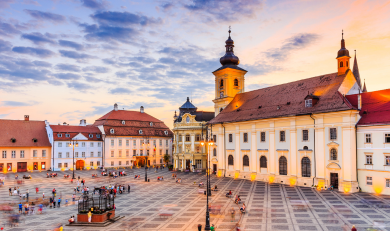
Living in Romania means settling into a country where tradition, rapid change, and strong personal relationships exist side by side. Romania often surprises expats: it can feel familiar in its European structure, yet distinctly different in how systems function and how people relate to one another. Daily life here is shaped less by rigid processes and more by adaptability, personal initiative, and trust built over time.
This guide is designed to help you understand Romania as a place to live long term, not just as a destination for short stays or surface-level impressions. Whether you are relocating for work, family, lifestyle, or remote income, settling well in Romania requires patience, cultural awareness, and a willingness to navigate contrast.
Understanding Daily Life in Romania
Daily life in Romania varies widely depending on location. Major cities like Bucharest, Cluj-Napoca, and Timișoara feel modern, energetic, and increasingly international, while smaller towns and rural areas follow much slower, tradition-oriented rhythms. This contrast is one of Romania’s defining features.
Romanians are generally warm, expressive, and direct once familiarity is established. Initial interactions may feel reserved, especially with institutions or professionals, but relationships tend to deepen quickly once trust is built. Personal connections matter, and people often rely on networks rather than systems alone.
Time is treated flexibly in many contexts. Appointments may start late, deadlines may shift, and processes may take longer than expected. This is not usually interpreted as disrespect but as part of a culture where improvisation and problem-solving are valued over strict adherence to schedules.
At the same time, Romanians value competence and self-reliance. You are expected to advocate for yourself, follow up persistently, and take initiative when something stalls. Passive waiting often leads to frustration, while calm persistence produces results.
Residency, Visas, and Bureaucracy
Romania’s immigration system is structured but can feel inconsistent in practice. EU citizens benefit from simplified residency processes, while non-EU expats must navigate visas tied to work, study, family reunification, or business activities.
Residency applications require documentation, in-person appointments, and patience. Procedures are generally clear, but interpretation can vary between offices and officials. Follow-up visits are common, and timelines are rarely precise.
Once residency is granted, access to healthcare, banking, and employment becomes easier. However, bureaucracy remains a constant presence in daily life. Forms, stamps, and physical paperwork are still widely used, even as digital systems expand.
Romania rewards those who approach administration calmly and persistently. Arguing rarely helps, but asking questions, returning with missing documents, and maintaining polite insistence usually does.
Permanent residency and citizenship are possible after long-term legal residence, language proficiency, and integration, though the process requires commitment and time.
Housing and Where You Live
Housing in Romania is affordable by European standards, particularly outside the capital and major tech hubs. Most expats rent apartments, which are often fully furnished and ready for immediate occupancy.
Buildings range from older communist-era blocks to modern developments. Older apartments may be spacious but poorly insulated, while newer units offer better comfort at higher prices. Asking about heating systems, maintenance responsibility, and utility costs is essential.
Leases are typically one year, though flexibility exists. Contracts may be simple, and informal arrangements are not uncommon, but clarity around rent, deposits, and notice periods is important.
Neighborhood choice significantly affects daily life. Central areas offer convenience and social activity, while residential districts provide quieter living at lower cost. In smaller cities, proximity to the city center often matters more than specific neighborhoods.
Cost of Living and Financial Reality
Romania offers a relatively low cost of living compared to much of Europe. Housing, local food, transportation, and services are affordable, allowing many expats to maintain a comfortable lifestyle on moderate incomes.
Imported goods, electronics, and international brands are more expensive relative to local wages. Dining out is common and affordable, especially in local restaurants, while international dining costs more.
Salaries vary widely. Local wages are modest, but remote workers or those employed by international companies often find Romania very affordable. This gap between local income and international purchasing power shapes social dynamics.
Banking is modern and accessible. Opening an account is straightforward with proper residency documentation, and digital payments are widely used. Cash is still common in smaller towns and informal settings.
Healthcare and Medical Care
Romania’s healthcare system includes both public and private options. Public healthcare is affordable but often overcrowded and under-resourced, with long wait times and variable quality.
Private healthcare is widely used by expats and offers significantly better experiences. Private clinics and hospitals in major cities provide modern facilities, English-speaking doctors, and shorter wait times at reasonable cost by international standards.
Health insurance is strongly recommended. While routine care is affordable out of pocket, serious illness or hospitalization can become costly without coverage.
Doctors are generally well-trained, though communication style can be direct. Clear questions and documentation help ensure continuity of care.
Work Culture and Professional Life
Romanian work culture is hierarchical but evolving. Traditional sectors maintain clear authority structures, while tech, startups, and international companies adopt more flexible and Western-style practices.
Communication in the workplace tends to be direct. Feedback may be blunt, and criticism is often delivered without softening language. This can feel abrupt to some expats but is rarely intended as personal.
Working hours vary by industry. In many offices, long hours are common, though work-life balance is improving, particularly among younger professionals.
Professional relationships matter. Trust, loyalty, and personal rapport influence collaboration and advancement as much as formal qualifications. Networking plays an important role in career development.
Language and Communication
Romanian is the official language, and while English is widely spoken among younger people and professionals, daily life becomes easier with basic Romanian knowledge.
Romanian communication is expressive and emotionally rich. Tone, facial expression, and context carry significant meaning. Conversations may be animated, and interruptions are common in informal settings.
At the same time, formality exists in official or professional contexts. Addressing people respectfully and using polite forms is appreciated, especially with older generations.
Making an effort to learn the language is noticed and often rewarded with warmer interactions and greater patience.
Transportation and Mobility
Transportation in Romania is functional but uneven. Major cities have reliable public transport systems, including buses, trams, and metro lines in Bucharest.
Outside urban centers, public transport can be infrequent and slow. Many expats choose to own a car, especially in smaller cities or rural areas.
Driving standards vary, and road infrastructure is improving but inconsistent. Defensive driving and patience are important.
Romania’s size makes domestic travel manageable, though train journeys can be slow. Internal flights connect major cities efficiently.
Culture, Tradition, and Social Norms
Romanian culture places strong value on family, tradition, and hospitality. Holidays, religious observances, and family gatherings play a central role in social life.
Religion, particularly Orthodox Christianity, influences customs and public life, even among non-practicing individuals. Respect for religious traditions is expected, especially in rural areas.
Social boundaries are flexible. Guests are often treated generously, and refusing hospitality may be seen as impolite. At the same time, privacy is respected once relationships are established.
Romanians can be skeptical of authority and institutions, a reflection of historical experience. This often leads to reliance on personal judgment and networks rather than formal systems.
Safety and Everyday Reality
Romania is generally safe, with low levels of violent crime. Petty theft occurs in crowded areas, but everyday life feels secure in most places.
Urban infrastructure varies. Noise, traffic, and air quality can affect quality of life in larger cities, while smaller towns offer quieter environments.
Economic inequality exists but is less visible than in some regions. Social mobility is improving, though disparities remain between urban and rural areas.
Building a Long-Term Life in Romania
Living well in Romania requires adaptability. Systems function, but not always smoothly. Expats who expect consistency and speed may become frustrated, while those who accept flexibility often thrive.
Social integration happens through repeated interaction and trust. Once relationships form, they tend to be loyal and long-lasting.
Romania offers depth rather than polish. It may not feel effortless, but it is engaging, affordable, and human in a way many expats find refreshing.
Final Thoughts
Living in Romania is about navigating contrast—between old and new, structure and improvisation, formality and warmth. It is a country that asks you to participate actively in daily life rather than rely on systems to carry you.
For expats willing to adapt expectations, learn the language, and build relationships patiently, Romania offers affordability, cultural richness, and a sense of authenticity that is increasingly rare. This guide provides the framework—but living well in Romania comes from embracing a place that values people over process and resilience over perfection.