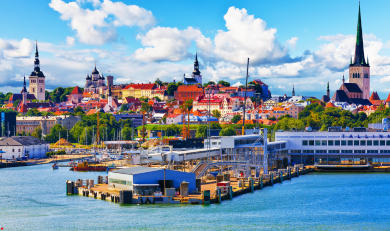
Living in Estonia means settling into a society that prizes independence, clarity, and quiet efficiency. Estonia is often associated with digital innovation and e-government—and those systems genuinely shape daily life—but long-term living here is defined just as much by reserve, personal responsibility, and a deep respect for boundaries. For expats, Estonia can feel refreshingly straightforward, though emotionally understated and socially gradual.
This guide is designed to help you understand Estonia as a place to live, not just as a tech-forward success story. Whether you are relocating for work, remote income, study, or long-term stability, settling well in Estonia depends on understanding its pace, social norms, and expectations around self-sufficiency.
Understanding Daily Life in Estonia
Daily life in Estonia is calm, predictable, and deliberately low-friction. People value order, punctuality, and reliability. Appointments start on time, instructions are followed carefully, and systems generally function as intended. There is little tolerance for chaos, but also little appetite for unnecessary urgency or emotional display.
Socially, Estonians are reserved and private. Silence is comfortable and common, not awkward. Conversations tend to be purposeful, and small talk is limited. This can feel distant to newcomers from more expressive cultures, but it reflects respect for personal space rather than lack of warmth.
Honesty is valued over politeness. People tend to say what they mean without embellishment, and they expect the same in return. Feedback is usually direct but calm, and emotional restraint is considered a sign of maturity.
There is a strong emphasis on independence. Adults are expected to manage their own affairs competently and not rely excessively on others. Help is available when genuinely needed, but self-reliance is a cultural baseline.
Residency, Visas, and Digital Bureaucracy
Estonia’s immigration system is transparent, rules-based, and notably digital. Residency options exist through employment, study, family reunification, entrepreneurship, and special programs for remote workers and digital professionals.
Applications are documentation-heavy but clearly structured. Decisions are generally consistent, and timelines are reliable if requirements are met. There is little flexibility for missing information, but little arbitrariness once criteria are satisfied.
Registration with national systems is essential and unlocks access to healthcare, banking, and public services. Estonia’s digital infrastructure means many administrative tasks can be completed online, reducing the need for repeated in-person visits.
Permanent residency and citizenship are attainable after long-term legal residence, language proficiency, and integration. Estonia rewards consistency, compliance, and patience rather than speed.
Housing and Where You Live
Housing in Estonia is generally functional, modern, and reasonably priced compared to many European capitals. Most expats rent apartments, often unfurnished, with practical layouts and efficient use of space.
Buildings are typically well insulated and designed for cold winters. Heating systems are reliable, and utilities function consistently. While apartments may feel minimalist, they are usually comfortable and energy-efficient.
Rental contracts are formal, and tenant rights are clearly defined. Deposits are standard, and long-term stability is common once housing is secured. Competition exists in central areas of Tallinn, but pressure is lower than in many Western European cities.
Location influences lifestyle more than housing quality. Urban living offers convenience and services, while smaller towns provide quiet, affordability, and proximity to nature. Public transport access is an important consideration, particularly in winter.
Cost of Living and Financial Reality
Estonia has a moderate cost of living by European standards. Housing is affordable relative to income, groceries are reasonably priced, and public services are efficient.
Dining out is available but not central to daily life. Many social interactions happen at home, in cafés, or through shared activities rather than frequent restaurant outings.
Salaries vary by sector. Technology and international companies offer competitive pay, while local wages are more modest. Taxes are transparent and fund public services rather than complex benefit structures.
Banking is modern and straightforward once residency documentation is in place. Digital payments dominate daily life, and cash is used infrequently.
Healthcare and Social Services
Estonia has a public healthcare system that provides universal coverage to residents. Once registered, access to doctors, hospitals, and specialist care is reliable and affordable.
Primary care is accessed through family doctors, who coordinate referrals to specialists. Wait times exist for non-urgent care, but emergency services are efficient and well organized.
Private healthcare exists and is often used for convenience or faster access, but it supplements rather than replaces the public system.
The broader social support system is functional and targeted. It emphasizes access and fairness over generosity, providing stability rather than extensive benefits.
Work Culture and Professional Life
Estonian work culture values autonomy, competence, and trust. Hierarchies are flat, titles are rarely emphasized, and managers are approachable.
Employees are expected to work independently and take responsibility for their tasks. Micromanagement is uncommon, and initiative is appreciated when it aligns with clear objectives.
Communication is direct and efficient. Meetings are concise, preparation is expected, and emotional language is limited. Feedback is factual rather than motivational.
Work-life balance is respected. Working hours are generally reasonable, and personal time is valued. Productivity matters more than presence.
Language and Communication
Estonian is the official language and essential for full integration. While English proficiency is high—particularly among younger people and professionals—daily life becomes easier with some Estonian knowledge.
Communication style is concise and literal. People tend to say exactly what they mean, without exaggeration. Silence is part of conversation, and interruptions are discouraged.
Learning Estonian is challenging due to its linguistic structure, but even modest effort is appreciated and often changes how people respond to you.
Official communication and documentation are usually in Estonian, making language support useful during early stages.
Transportation and Mobility
Estonia has a reliable transportation system, particularly in urban areas. Public transport in cities is efficient and widely used, and intercity connections are dependable.
Car ownership is common outside major cities, but not essential in urban centers. Roads are well maintained, and driving culture is calm and orderly.
Cycling and walking are common during warmer months, while winter conditions require adjustment and planning.
Distances are manageable, and domestic travel is straightforward, contributing to a sense of accessibility.
Climate and Seasonal Living
Estonia’s climate has a strong influence on daily life. Winters are long, cold, and dark, while summers are short but bright and active.
Seasonal adaptation is essential. People structure routines, energy, and social life around the calendar. Winter emphasizes indoor comfort and routine, while summer brings long daylight hours and outdoor activity.
Seasonal affective challenges are common. Estonians manage this through routine, physical activity, and acceptance of seasonal rhythms rather than constant positivity.
Understanding and respecting the seasonal cycle is key to long-term well-being.
Culture, Values, and Social Norms
Estonian culture values modesty, honesty, and personal autonomy. Standing out unnecessarily or seeking attention is discouraged.
Privacy is deeply respected. Personal matters are shared selectively, and boundaries are clear. Friendships develop slowly but tend to be stable and loyal.
Nature plays a central role in identity. Access to forests, coastlines, and open space is considered essential, not optional.
Trust is a foundational value. Institutions are trusted, corruption is minimal, and rules are followed because they are seen as fair.
Safety and Everyday Reality
Estonia is very safe. Violent crime is rare, and public spaces feel secure at all hours.
Infrastructure is reliable, utilities function consistently, and emergency services respond effectively. Daily life feels stable and predictable.
The main challenges are environmental and emotional rather than physical—dark winters, quiet social life, and limited spontaneity.
Social Life and Integration
Social integration in Estonia takes time. While people are polite and cooperative, friendships are not formed quickly or casually.
Social life often revolves around shared activities—workplaces, hobbies, sports, or community events—rather than spontaneous gatherings.
Alcohol plays a visible role in socializing, particularly in informal settings, though this is gradually changing.
Expats who participate consistently in local routines tend to integrate more successfully than those who rely solely on expat circles.
Building a Long-Term Life in Estonia
Living well in Estonia requires patience, independence, and acceptance of quiet. Systems work, but they expect participation and responsibility.
Expats who thrive are those who value structure, autonomy, and long-term stability. Those seeking constant stimulation or expressive social environments may struggle.
Over time, routines settle, trust builds, and daily life becomes smooth and dependable. Estonia reveals its strengths gradually rather than dramatically.
Final Thoughts
Living in Estonia is about clarity, independence, and quiet reliability. It is a country that prioritizes function over display and fairness over intensity.
For expats willing to learn the language, adapt to the climate, and embrace a culture of self-reliance and trust, Estonia offers a secure, efficient, and deeply livable way of life. This guide provides the framework—but living well here comes from understanding that in Estonia, silence is not distance, and simplicity is a form of strength.