
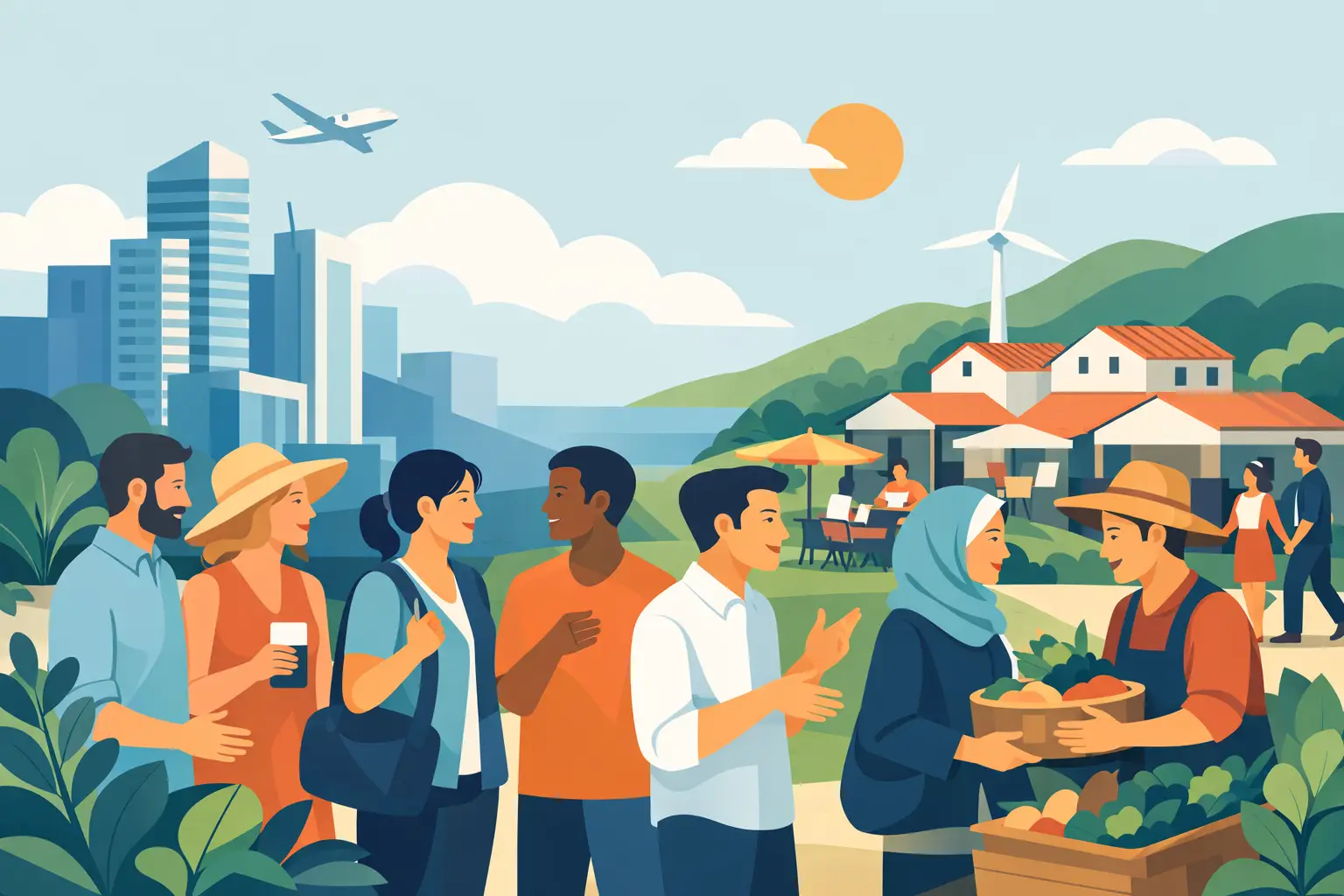
A decade ago, finding your people abroad often meant joining the nearest national club, attending a weekly meetup, or asking another newcomer where to buy familiar groceries. The future of expat communities is less centralized than that. Support is becoming easier to find, but it is also more fragmented, more temporary, and more dependent on how willing newcomers are to participate in local life.
That shift matters because community is not a nice extra after a move. It affects whether you learn how things work, feel comfortable asking for help, build a routine, and decide to stay. For many expats, the real challenge is no longer locating other English speakers. It is finding relationships and networks that make daily life abroad more stable.
Why Expats Communities Are Changing
International mobility has broadened. Traditional corporate assignments still exist, but they now sit alongside remote workers, self-employed professionals, international students, retirees, binational couples, and families moving for a partner’s job. These groups arrive with different budgets, schedules, legal rights, and expectations of how long they will stay.
A person on a two-year company assignment may have relocation support, colleagues, and a built-in social calendar. A remote worker who arrives alone may have none of those things. A parent with school-age children may meet people quickly through school gates but struggle to build friendships outside family routines. There is no single expat experience, so the old model of one broad “international community” is becoming less useful.
Technology has accelerated this change. Neighborhood chat groups, coworking spaces, professional networks, hobby communities, parent groups, and messaging apps let people find highly specific support quickly. You may not need a general expat association to find a tax accountant, a running group, or advice on local childcare. But highly targeted groups can also keep people in narrow circles, with little incentive to understand the wider place they live.
The result is a more flexible community landscape. It can be better suited to real needs, but it requires more intentional choices from newcomers.
The Future of Expat Communities Will Not Be One Big Bubble
Expat communities have always served a practical purpose. They offer shared language, mutual understanding, and shortcuts through unfamiliar systems. Someone who has already opened a bank account, dealt with a landlord, or enrolled a child in school can often explain the process in plain terms. That kind of knowledge is valuable, especially during the first months abroad.
The problem begins when an expat network becomes the only network. Advice can become outdated, overly negative, or based on assumptions that do not apply to everyone. A group of people who arrived under similar circumstances may reinforce one another’s frustrations without showing how local residents actually approach the same issue.
In the future, the strongest expat communities are likely to be mixed communities. They will include newcomers at different stages, long-term foreign residents, local people with international experience, and professionals who understand the systems that shape everyday life. The shared point will not be nationality alone. It will be a common interest, neighborhood, workplace, school, profession, or practical need.
This does not mean every expat should immediately stop seeking familiar company. Cultural comfort can be restorative, particularly when language fatigue, homesickness, or bureaucracy is wearing you down. The goal is balance. A healthy support network gives you a place to speak freely while also helping you understand the country on its own terms.
Local knowledge will carry more weight
As generic relocation advice becomes easier to find online, people will place greater value on context. Knowing that a form exists is different from knowing when an office is busiest, how directly to follow up, whether an appointment usually runs late, or what a landlord expects before approving an application.
These details are often passed through community. The most useful future networks will not simply trade recommendations. They will explain the hidden rules behind them. Why does a local doctor expect patients to communicate in a certain way? Why do neighbors rarely invite people home quickly in one city, while informal drop-ins are normal in another? Why does a school communicate with parents through one platform but handle sensitive questions face to face?
That is the kind of practical interpretation that helps an outsider become functional and confident rather than permanently dependent on other outsiders.
Digital Communities Will Be Useful, but Not Enough
Online groups are now the first stop for many people preparing to move. They can reduce isolation before arrival and provide immediate answers after landing. For someone who has just moved, a neighborhood group can be the fastest way to find a pediatrician, a reliable repair person, or confirmation that a confusing bill is legitimate.
But digital communities come with limits. The loudest voices are not always the best informed. Posts often reward certainty, even when immigration rules, rental practices, and service standards vary by location or change over time. A negative experience can appear universal when it is not.
There is also a social trap: online connection can feel like belonging without creating the ties that make a place feel like home. You may know dozens of people in a group chat and still have no one to call if you are sick, need help picking up a child, or simply want company on a difficult weekend.
Use online communities as a starting point, not a complete social plan. Look for opportunities that repeat over time: a class, volunteer role, sports club, professional event, language exchange, faith community, or regular neighborhood activity. Repeated contact is less glamorous than a large meetup, but it is how acquaintances become dependable relationships.
Communities Will Be More Temporary, So Routines Matter
Many international cities have high turnover. Friends leave when contracts end, visa rules change, children graduate, or a remote job shifts location. This is not new, but more mobile careers and flexible work arrangements can make the cycle faster.
The practical effect is that expats need to build community in layers. One layer might be close friends. Another might be parents at school, trusted neighbors, professional contacts, local service providers, and people who share a weekly routine. Not every relationship needs to become a deep friendship to make life abroad easier.
This is especially relevant for long-term expats. If all of your relationships are tied to newly arrived people, you may repeatedly restart your social life. Investing in local routines creates continuity when the international crowd changes. A familiar café owner, a teammate, a neighbor, or a colleague can become part of the structure that keeps you grounded.
Language remains a dividing line
Translation tools will improve and English will remain common in many international settings, but language will still shape who gets included. The issue is not only practical communication. Language carries humor, trust, social cues, and access to conversations that are not designed for outsiders.
You do not need fluency before you participate. Waiting until your language skills are perfect can delay integration for years. But learning enough to handle ordinary interactions signals effort and expands your options. It helps you join groups that are not built around expat life and lets you see the difference between what people say publicly and how they talk among themselves.
For families, this can be particularly sensitive. Children may integrate faster through school while parents remain dependent on English-language circles. Making room for imperfect local-language conversations can narrow that gap over time.
What This Means for Newcomers
The best approach is not to choose between an expat bubble and total local immersion. Both extremes can leave you unsupported. Instead, build a network that reflects the life you want to have in six months, not only the help you need in your first week.
Start with practical connections. Find people who understand your neighborhood, your work situation, your child’s school system, or the local healthcare process. Then add social settings that are not centered on relocation. Choose one or two activities you can attend consistently, even when work gets busy or you feel self-conscious.
Be selective about whose advice you follow. Ask whether their circumstances resemble yours, when they last dealt with the issue, and whether their experience is specific to one city or broadly applicable. A long-term resident can offer perspective, but a recent arrival may know more about a newly changed process. Both can be useful when you understand the limits.
Most of all, allow community to develop slowly. Living abroad can create pressure to make friends quickly, especially when you have left established relationships behind. Yet dependable connections usually grow through small, repeated moments: seeing the same faces, offering help, accepting invitations, and showing up again.
The future of expat communities will reward that kind of participation. Find people who make your new country easier to understand, then give yourself enough time to become one of the people who can do the same for someone else.