
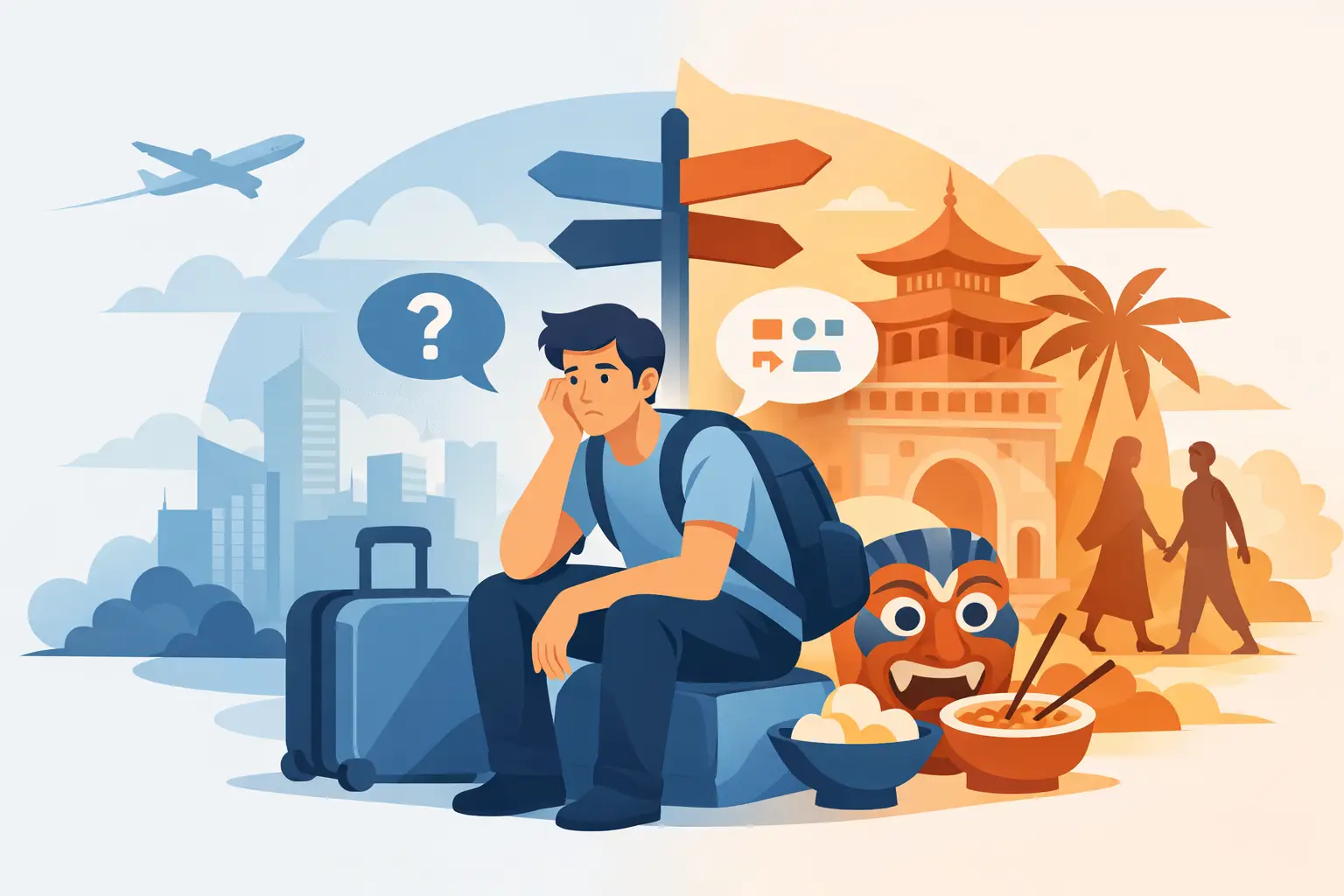
The hard part often starts after the move is technically done. Your paperwork may be sorted, your bags unpacked, and your first grocery run complete, but daily life still feels off. If you are figuring out how to handle culture shock abroad, that reaction is not a sign you made a bad decision. It usually means you are now dealing with the real transition: learning how a place works when you are no longer just passing through.
Culture shock is not only about dramatic misunderstandings or obvious language barriers. More often, it shows up in small moments that wear you down over time. You may feel strangely tired after simple errands, irritated by routines that seem inefficient, or embarrassed when you realize you misread what was expected. That friction is common because culture lives in habits, timing, social rules, and unspoken assumptions – not just food, holidays, or famous customs.
What culture shock actually feels like in everyday life
A lot of people expect culture shock to arrive as one big emotional crash. Sometimes it does, but just as often it builds gradually. At first, everything feels interesting because it is new. Then the novelty fades, and the mental effort of interpreting everything starts to catch up with you.
You may notice that ordinary tasks require more concentration than they used to. Buying medicine, making small talk with neighbors, understanding office dynamics, or figuring out what counts as rude can suddenly feel exhausting. Even if you are functioning well on paper, you can still feel unsettled.
This is one reason advice about staying positive often falls flat. The issue is not that you are ungrateful. The issue is that your old shortcuts for understanding social life no longer work. Your brain is doing more work than usual, and that has emotional consequences.
How to handle culture shock abroad without making it worse
The first useful shift is to stop treating every difficult moment as a verdict on the country or on yourself. Early frustration can make people overcorrect in two directions. Some decide the local way is wrong and reject it. Others assume they are failing and become overly self-critical. Neither response helps much.
A better approach is to separate what is unfamiliar from what is genuinely unworkable. Not every local custom needs to become your personal preference. At the same time, not every discomfort means something is broken. Sometimes the system is inefficient. Sometimes it is just different. Knowing the difference takes time.
It also helps to lower the pressure to adapt quickly in every area at once. Many expats create unnecessary stress by expecting themselves to master language, social etiquette, bureaucracy, transportation, housing norms, and friendship-building all at the same speed. That is rarely realistic. Focus first on the parts of life that affect your stability most: housing, food, transportation, communication, and access to health care. Confidence grows faster when your basics feel manageable.
Learn the hidden rules, not just the visible customs
One of the fastest ways to reduce culture shock is to pay attention to patterns beneath the surface. Most adjustment problems are not caused by what people publicly describe about their culture. They come from the rules nobody thinks to explain.
For example, a country may appear very friendly, but that does not mean people form close friendships quickly. A workplace may seem casual, but hierarchy may still matter a great deal. A city may look disorganized, yet there may be clear social expectations about queuing, greetings, punctuality, and personal space. If you only read the visible signals, you may misjudge the situation.
Try to observe before you interpret. Notice how people ask for help, how directly they say no, how much planning goes into social plans, and what level of emotional expressiveness is normal in public. These details tell you more than broad stereotypes ever will.
This is also where talking to long-term residents and experienced expats can be useful. Ask practical questions instead of general ones. What is considered pushy here? How late is actually late? Do neighbors usually socialize, or keep to themselves? What is normal in this setting may not be obvious from the outside.
Build routines before you build a perfect social life
A common mistake after moving abroad is assuming that happiness depends mainly on quickly finding your people. Social connection matters, but routine matters just as much. If every basic task still feels uncertain, loneliness usually feels sharper.
Start by making daily life more predictable. Find one grocery store you understand. Learn one reliable route across the city. Identify one café, park, gym, or workspace where you feel comfortable returning. Create a weekday rhythm, even if it is simple. Familiarity reduces stress because it gives your day less room to feel chaotic.
This may sound small, but it changes the experience of a place. Once your environment stops feeling entirely random, you have more energy to engage socially and stay open to learning. Adjustment often works in that order, not the other way around.
Make room for homesickness without feeding it
Homesickness can be surprisingly physical. It may show up as irritability, fatigue, poor concentration, or the urge to withdraw. That does not mean you should ignore home entirely, but it does mean you need to handle it carefully.
Staying connected to family and friends can help, especially in the early stages. But if every difficult day ends with long calls home and constant comparison to your old life, you may keep yourself psychologically half-outside your new one. There is a difference between support and retreat.
Try to keep a few familiar anchors without recreating your entire old routine. Cook one meal that feels like home. Keep regular contact with people who calm you down. Then put equal effort into learning where to buy what you need locally, where you can relax, and what parts of this new place can start to feel like yours.
When culture shock is really about control
A lot of frustration abroad is not purely cultural. It is about loss of competence. At home, you know how to solve problems quickly. Abroad, the same problem may take three times as long because you do not know the process, the language, or the expected tone.
That loss of efficiency can make capable adults feel unusually dependent or clumsy. Professionals who are confident at work may suddenly struggle with utilities, banking, or parent-school communication. Students may be fine academically but feel socially behind. Parents may adapt in some ways and still feel overwhelmed by local systems.
This matters because the solution is not always emotional resilience. Sometimes the answer is practical competence. If one part of life keeps draining you, learn that system properly. Understand how appointments work. Learn the customer service norms. Save key phrases. Write down steps for repeat tasks. The less guesswork you do, the less stress your day creates.
How to handle culture shock abroad at work and socially
Workplace culture and social culture often move at different speeds. You may understand one and still struggle with the other. Someone can do well in a local office but find it hard to make friends outside work. Others settle into a social scene but keep misreading professional expectations.
At work, watch how decisions are actually made, not how the organization describes itself. Notice who gets copied on emails, how disagreement is expressed, and whether initiative is rewarded or seen as overstepping. These are culture clues as much as business habits.
Socially, resist the urge to judge distance too quickly. In some places, warmth is immediate but not deep. In others, people seem reserved at first but become loyal once trust is built. If you expect friendship to develop according to your home culture’s pace, you may assume rejection where there is simply a different timeline.
Give the adjustment process more than one phase
People often talk about culture shock as if it ends once you feel more comfortable. In reality, adjustment tends to come in rounds. You may feel settled for a while, then hit a new wall when your job changes, your child starts school, the weather shifts, or the administrative systems become more complex.
That does not mean you are starting over. It usually means you have moved into a deeper layer of local life. Early adaptation is about getting through the day. Later adaptation is about understanding nuance, managing expectations, and deciding what kind of life you want to build here.
That is also why comparing your timeline to someone else’s is rarely useful. A remote worker in an international city, a family in a suburban area, and a student in a university bubble are not adapting to the same environment, even in the same country. Your version of culture shock depends on how you live, where you work, who you rely on, and how much local interaction your daily life requires.
If the place still feels difficult, that does not mean you are bad at expat life. It may just mean you are still in the part where reality is becoming clear. Keep paying attention to what drains you, what helps you function, and what starts to feel natural with repetition. That is usually how a foreign place becomes livable – not all at once, but through enough small moments that stop feeling foreign.