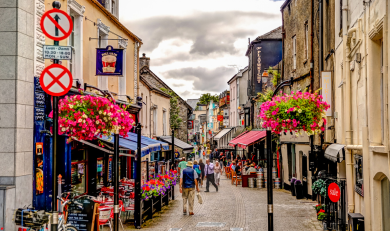
Living in Ireland means settling into a society that is friendly on the surface, structured beneath, and shaped by history, weather, and a strong sense of fairness. Ireland is often described as welcoming and easygoing—and it can be—but long-term life here is defined by housing pressure, high living costs, and a culture that values humility, humor, and quiet resilience. For expats, Ireland feels familiar quickly, but full integration takes time.
This guide is designed to help you understand Ireland as a place to live, not just a place that feels socially comfortable. Whether you are relocating for work, family, study, or long-term stability, settling well in Ireland depends on understanding how its systems function and how social norms guide daily life.
Understanding Daily Life in Ireland
Daily life in Ireland is calm, conversational, and routine-driven. People value politeness, understatement, and a sense of balance. Interactions are usually friendly, but not intrusive. Humor—often dry or self-deprecating—is a key social lubricant and helps ease tension or uncertainty.
Time is respected, though not rigidly. Appointments generally start on time, but there is tolerance for small delays. Planning matters, particularly in professional settings, while social plans may remain flexible until close to the moment.
Irish people tend to avoid open confrontation. Disagreement is often softened with humor or indirect phrasing, and maintaining social harmony matters. This can sometimes feel vague to expats used to direct communication, but it reflects a cultural preference for keeping things comfortable rather than sharp.
There is a strong sense of fairness and shared responsibility. People generally follow rules, queue patiently, and expect institutions to function predictably. Trust in public systems is high, even when those systems are slow.
Residency, Visas, and Bureaucracy
Ireland’s immigration system is structured and rules-based. Residency options depend on employment, study, family reunification, or EU citizenship. Processes are generally clear, but documentation requirements are strict and timelines can be lengthy.
Employment permits are central to non-EU expat life. Permits are usually tied to specific employers and roles, which limits flexibility. Changing jobs often requires new approval, making early career decisions important.
Once residency is granted, registration with local authorities is essential. This registration underpins access to healthcare, banking, taxation, and social services. Without it, daily life becomes complicated quickly.
Permanent residency and citizenship are attainable after long-term legal residence and integration. Ireland rewards consistency, compliance, and patience rather than shortcuts.
Housing and Where You Live
Housing is one of the biggest challenges for expats in Ireland. Demand far exceeds supply, particularly in Dublin and other major urban centers. Finding accommodation often requires persistence, flexibility, and realistic expectations.
Most expats rent apartments or houses, typically unfurnished. Properties are generally modest in size, and older housing stock may suffer from poor insulation, dampness, or inefficient heating.
Rental contracts are formal, and tenant rights are protected, but competition is intense. Viewings move quickly, and references, proof of income, and immediate decisions are often required.
Location strongly affects quality of life. Proximity to work, public transport, and daily services matters more than space. Many expats choose commuter towns to balance cost and access, though commuting can be time-consuming.
Cost of Living and Financial Reality
Ireland has a high cost of living, particularly for housing, childcare, and dining out. Groceries and utilities are moderately priced, but overall expenses add up quickly.
Salaries are competitive in sectors such as technology, finance, and pharmaceuticals, which attracts many expats. However, wage growth does not always keep pace with housing costs, leading to financial pressure even for professionals.
Taxes are transparent and fund public services such as healthcare, education, and infrastructure. While rates are not low, the system is predictable and straightforward once registered.
Banking is modern and reliable. Opening an account requires residency documentation, but digital banking and cashless payments dominate daily life.
Healthcare and Public Services
Ireland has a mixed public-private healthcare system. Public healthcare is available to residents, but wait times for non-urgent care can be long.
Many expats rely on private health insurance to access faster treatment and specialist care. Private coverage is common and often provided by employers.
Primary care operates through general practitioners, who act as gatekeepers to specialist services. Access to a GP can be challenging in some areas due to shortages.
Healthcare quality is generally good, but navigating the system requires persistence and planning rather than urgency.
Work Culture and Professional Life
Irish work culture is collaborative, polite, and relationship-oriented. Hierarchies exist but are relatively flat, and managers are generally approachable.
Communication is indirect and diplomatic. Feedback is often softened, and disagreement is expressed carefully. Reading tone and context is important in professional settings.
Work-life balance is valued in principle, though workload varies by industry. Overtime exists, but it is not celebrated culturally. Taking leave and maintaining personal time is generally respected.
Professional success often depends as much on interpersonal fit as technical skill. Reliability, humility, and consistency are highly valued.
Language and Communication
English is the primary language, making daily life accessible for most expats. However, communication style is nuanced.
Irish communication often uses understatement, humor, and indirect phrasing. What is not said can matter as much as what is said. Strong opinions may be delivered lightly, while criticism may be implied rather than stated.
Listening carefully and responding modestly helps build trust. Overly assertive or confrontational styles can feel uncomfortable to locals.
Irish Gaelic is part of national identity and appears in signage and education, but fluency is not required for daily life.
Transportation and Mobility
Ireland’s transportation system is functional but limited outside major cities. Dublin has buses, trams, and commuter trains, though congestion and delays occur.
Public transport in regional areas is less frequent, making car ownership common outside urban centers. Roads are generally well maintained, but traffic congestion is a growing issue.
Walking is central to daily life in towns and cities, though weather affects routines. Cycling is growing in popularity, supported by improving infrastructure.
Ireland’s island geography makes international travel dependent on flights or ferries, reinforcing a sense of distance from continental Europe.
Climate and Seasonal Living
Ireland’s climate is mild but wet and changeable. Rain, wind, and overcast skies are common, shaping daily routines and social life.
Winters are relatively mild but dark, while summers bring long daylight hours and bursts of activity. Weather rarely stops life, but it does influence mood and planning.
People adapt by maintaining routines, social connections, and indoor comforts. Complaining about the weather is a national pastime, but it rarely disrupts daily functioning.
Culture, Values, and Social Norms
Irish culture values modesty, friendliness, and emotional balance. Standing out excessively or appearing arrogant is generally discouraged.
Community matters. Local pubs, sports clubs, and neighborhood events play a central role in social life, particularly outside major cities.
Tradition and modernity coexist. While Ireland is socially progressive in many ways, respect for history and continuity remains strong.
Religion, particularly Catholicism, has shaped society historically, even though daily religious practice has declined. Holidays and social rhythms still reflect this heritage.
Safety and Everyday Reality
Ireland is generally very safe. Violent crime is rare, and public spaces feel secure at all hours.
Trust in institutions is high, and corruption is minimal. This contributes to a sense of stability and predictability in daily life.
The main everyday frustrations tend to be logistical—housing shortages, healthcare access, and transport—rather than safety concerns.
Social Life and Integration
Social integration in Ireland is often easier at the surface level than at depth. People are friendly and approachable, but deeper friendships take time.
Social life often revolves around shared routines—workplaces, sports, local pubs, and community activities. Consistency matters more than intensity.
Expats who participate regularly in local life tend to integrate more successfully than those who rely solely on expat networks.
Humor and shared experience are key to building trust. Taking oneself too seriously can create distance.
Building a Long-Term Life in Ireland
Living well in Ireland requires patience and realism. The country offers safety, community, and opportunity, but not speed or ease.
Expats who thrive are those who value social warmth, stability, and long-term quality of life over rapid progress or low costs.
Those expecting efficiency without friction or immediate belonging may struggle.
Over time, routines settle, social connections deepen, and daily life becomes quietly dependable.
Final Thoughts
Living in Ireland is about finding comfort in consistency, humor in challenge, and balance in everyday routines. It is not a country that dazzles through intensity, but one that sustains through community and reliability.
For expats willing to adapt to high costs, subtle communication, and a housing-constrained environment, Ireland offers warmth, safety, and a deeply human way of life. This guide provides the framework—but living well here comes from embracing a culture where connection is gentle, progress is steady, and belonging is earned through presence rather than performance.